


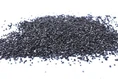


As a supplier of Liquor Special Activated Carbon, I've witnessed firsthand the critical role that particle size plays in determining the performance of this remarkable product. In this blog post, I'll delve into the intricate relationship between the particle size of Liquor Special Activated Carbon and its performance, exploring how different particle sizes can impact various aspects of its functionality.


Surface Area and Adsorption Capacity
One of the most fundamental ways in which particle size affects the performance of Liquor Special Activated Carbon is through its influence on surface area. Activated carbon is known for its high surface area, which provides numerous sites for adsorption. Smaller particle sizes generally result in a larger total surface area per unit mass of activated carbon.
When the particle size is reduced, the number of individual carbon particles increases, leading to a greater cumulative surface area. This increased surface area allows for more contact between the activated carbon and the impurities in the liquor, enhancing the adsorption capacity. For example, in the removal of color - causing compounds and off - flavors from liquor, a finer particle size can adsorb these substances more effectively due to the larger available surface area for interaction.
However, it's important to note that while smaller particle sizes offer higher surface area, there are practical limitations. Extremely small particles can be difficult to handle during the filtration process. They may cause clogging in filters, leading to increased pressure drop and reduced flow rates. This can result in longer processing times and potentially higher operational costs.
Diffusion and Kinetics
Particle size also has a significant impact on the diffusion of impurities into the pores of the activated carbon. Diffusion is the process by which molecules move from an area of high concentration (the liquor) to an area of low concentration (inside the pores of the activated carbon).
In the case of larger particle sizes, the diffusion path for impurities to reach the internal pores of the activated carbon is longer. This can slow down the adsorption kinetics, meaning that it takes more time for the activated carbon to reach its maximum adsorption capacity. On the other hand, smaller particles have shorter diffusion paths. Impurities can quickly penetrate into the pores, allowing for faster adsorption rates.
For instance, when treating liquor with a high concentration of contaminants, a smaller particle size of Liquor Special Activated Carbon can achieve a more rapid reduction in impurity levels. This is particularly important in industrial liquor production, where time is often a crucial factor in meeting production schedules.
Filtration and Separation
The particle size of Liquor Special Activated Carbon directly affects the filtration and separation process. In a liquor treatment system, the activated carbon is typically used in a filtration setup. The choice of particle size depends on the type of filtration equipment and the desired level of purification.
Larger particle sizes are often preferred when using coarse filtration systems. They are less likely to pass through the filter media and can be easily retained in the filter bed. This makes them suitable for applications where a simple and robust filtration process is required. For example, in some traditional liquor - making processes, larger - sized activated carbon can be used in a basic gravity - fed filtration system.
Conversely, smaller particle sizes are better suited for more advanced filtration systems that can handle fine particles. These systems can achieve a higher level of purification by effectively capturing the smaller activated carbon particles along with the adsorbed impurities. However, as mentioned earlier, the risk of clogging needs to be carefully managed when using small - sized particles.
Selectivity
The particle size can also influence the selectivity of Liquor Special Activated Carbon. Selectivity refers to the ability of the activated carbon to preferentially adsorb certain types of impurities over others.
Smaller particle sizes may have a different selectivity profile compared to larger ones. The smaller pores associated with smaller particles can be more selective towards smaller - sized impurity molecules. For example, in the removal of certain volatile organic compounds (VOCs) from liquor, smaller - sized activated carbon may be more effective in adsorbing these relatively small molecules due to the better - matched pore size.
Larger particles, with their larger pores, may be more suitable for adsorbing larger - sized impurities such as some high - molecular - weight flavor compounds. This selectivity can be exploited in liquor production to fine - tune the flavor and quality of the final product.
Practical Considerations in Choosing Particle Size
When choosing the appropriate particle size of Liquor Special Activated Carbon for a specific liquor treatment application, several practical factors need to be considered.
First, the nature of the impurities in the liquor is crucial. If the liquor contains mainly small - sized impurities, a smaller particle size of activated carbon may be more appropriate. On the other hand, if there are larger - sized contaminants, larger particles could be a better choice.
Second, the filtration equipment available plays a significant role. The filter's pore size and design need to be compatible with the particle size of the activated carbon to ensure efficient filtration.
Third, cost is an important consideration. Smaller particle sizes may be more expensive to produce due to the additional processing steps required. Additionally, the operational costs associated with handling and filtering smaller particles need to be factored in.
Our Product Range
At our company, we offer a wide range of Liquor Special Activated Carbon with different particle sizes to meet the diverse needs of our customers. Our Coal Broken Activated Carbon and Coal Columnar Activated Carbon are carefully manufactured to ensure high quality and consistent performance.
Whether you need a fine - grained activated carbon for rapid and high - efficiency adsorption or a coarser product for a more straightforward filtration process, we have the solution for you. Our team of experts can provide professional advice on choosing the most suitable particle size for your specific liquor treatment requirements.
Contact Us for Procurement
If you're interested in learning more about our Liquor Special Activated Carbon products or would like to discuss your procurement needs, we encourage you to get in touch with us. Our dedicated sales team is ready to assist you in finding the perfect activated carbon solution for your liquor production process.
References
- "Activated Carbon Adsorption" by Perry's Chemical Engineers' Handbook.
- "Carbon Adsorption in the Food and Beverage Industry" - Journal of Food Science and Technology.
- "Particle Size Effects on Adsorption Kinetics" - International Journal of Environmental Science and Technology.