


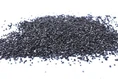


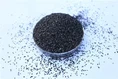
Hey there! As a supplier of Coal Columnar Activated Carbon, I often get asked about the pore structure of this amazing product. So, I thought I'd take a moment to break it down for you and explain why it matters.
First off, let's talk about what activated carbon is. Activated carbon is a form of carbon that has been processed to have a lot of tiny pores. These pores give the carbon a huge surface area, which is what makes it so good at adsorbing (or sticking to) other substances. Coal Columnar Activated Carbon is made from coal, and it's shaped into columns. This shape makes it easy to use in a variety of applications, from water treatment to air purification.
Now, let's get into the pore structure. The pore structure of Coal Columnar Activated Carbon is super important because it determines how well the carbon can adsorb different substances. There are three main types of pores in activated carbon: micropores, mesopores, and macropores.
Micropores are the smallest pores, with a diameter of less than 2 nanometers. These pores are really good at adsorbing small molecules, like gases and volatile organic compounds (VOCs). Because of their small size, micropores have a high surface area per unit volume, which means they can adsorb a lot of these small molecules.
Mesopores are a bit larger, with a diameter between 2 and 50 nanometers. These pores are good at adsorbing larger molecules, like dyes and some heavy metals. Mesopores provide a pathway for these larger molecules to reach the micropores, where they can be adsorbed.
Macropores are the largest pores, with a diameter greater than 50 nanometers. These pores are mainly used for transporting molecules into the carbon. They act like highways, allowing molecules to quickly move through the carbon and reach the smaller pores where adsorption takes place.
The pore structure of Coal Columnar Activated Carbon can be controlled during the manufacturing process. By adjusting the activation conditions, such as the temperature, time, and type of activating agent, we can create a carbon with a specific pore size distribution. This means we can tailor the carbon to meet the needs of different applications.
For example, if you're using the carbon for water treatment, you might want a carbon with a high proportion of micropores to adsorb small contaminants like chlorine and pesticides. On the other hand, if you're using the carbon for air purification, you might want a carbon with a more balanced pore size distribution to adsorb both small gases and larger particulate matter.
One of the great things about Coal Columnar Activated Carbon is its versatility. Because of its unique pore structure, it can be used in a wide range of applications. Here are just a few examples:
- Water Treatment: Coal Columnar Activated Carbon is commonly used to remove impurities from water. It can adsorb organic compounds, chlorine, and heavy metals, making the water safer to drink. You can check out our Liquor Special Activated Carbon for more information on carbon used in specific water treatment applications.
- Air Purification: In air filters, the carbon adsorbs pollutants like VOCs, odors, and particulate matter. This helps to improve indoor air quality and create a healthier environment.
- Industrial Processes: Many industries use Coal Columnar Activated Carbon in their manufacturing processes. It can be used to purify chemicals, recover solvents, and remove impurities from gases. Our Coal Broken Activated Carbon is also a great option for some industrial applications.
As a supplier, we take pride in providing high-quality Coal Columnar Activated Carbon. Our carbon is made from high-grade coal and undergoes a rigorous manufacturing process to ensure a consistent and effective pore structure. We also offer a range of different grades and sizes to meet the specific needs of our customers.
If you're in the market for Coal Columnar Activated Carbon, I encourage you to check out our product. We'd be happy to discuss your requirements and help you find the right carbon for your application. Whether you're a small business or a large industrial operation, we have the expertise and products to meet your needs.


So, if you have any questions or want to start a conversation about purchasing Coal Columnar Activated Carbon, don't hesitate to reach out. We're here to help you get the most out of this amazing product.
References
- "Activated Carbon: Surface Chemistry, Adsorption Kinetics, and Applications" by S. K. Bhattacharyya and A. K. Gupta
- "Carbon Materials for Advanced Technologies" edited by M. S. Dresselhaus, G. Dresselhaus, and A. Jorio