


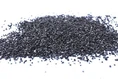

The particle size of nutshell water purification activated carbon is a crucial factor that significantly impacts its performance and application in water treatment processes. As a leading supplier of nutshell water purification activated carbon, understanding the importance of particle size is essential for providing the most effective solutions to our customers.
Understanding the Basics of Nutshell Water Purification Activated Carbon
Nutshell water purification activated carbon is derived from nutshells, such as coconut shells or walnut shells, through a specialized activation process. This process creates a highly porous structure with a large surface area, which enables the activated carbon to adsorb contaminants from water effectively. The adsorption capacity of activated carbon is directly related to its surface area, and the particle size plays a vital role in determining the available surface area for adsorption.
Importance of Particle Size
The particle size of nutshell water purification activated carbon affects several key aspects of its performance, including adsorption efficiency, flow rate, and pressure drop.
-
Adsorption Efficiency: Smaller particle sizes generally offer a larger surface area per unit volume, which means more adsorption sites are available for contaminants. This results in higher adsorption efficiency and the ability to remove a greater amount of impurities from water. For example, in a water treatment system where the removal of organic compounds such as pesticides or industrial chemicals is critical, activated carbon with a smaller particle size may be more effective.
-
Flow Rate: On the other hand, larger particle sizes allow for a higher flow rate of water through the activated carbon bed. This is important in applications where a large volume of water needs to be treated quickly, such as in municipal water treatment plants or large - scale industrial facilities. If the particle size is too small, it can lead to a significant decrease in the flow rate, which may require additional energy to pump the water through the system.
-
Pressure Drop: The particle size also influences the pressure drop across the activated carbon filter. Smaller particles create a more tortuous path for water to flow through the filter bed, resulting in a higher pressure drop. Excessive pressure drop can cause operational problems, such as increased energy consumption and premature fouling of the filter. Therefore, finding the right balance between particle size, adsorption efficiency, and pressure drop is crucial for the optimal performance of the water purification system.
Common Particle Sizes and Their Applications
There are several common particle sizes of nutshell water purification activated carbon, each suitable for different applications:
-
Granular Activated Carbon (GAC): Granular activated carbon typically has a particle size ranging from 0.5 to 4 mm. GAC is widely used in water treatment due to its good balance between adsorption capacity and flow rate. It is commonly used in household water filters, commercial water purification systems, and in certain industrial applications where a moderate flow rate and high adsorption efficiency are required. For example, in a point - of - use water filter for a home kitchen, GAC can effectively remove chlorine, volatile organic compounds (VOCs), and other contaminants to improve the taste and odor of drinking water.
-
Powdered Activated Carbon (PAC): PAC has a very small particle size, usually less than 0.18 mm. Its extremely high surface area makes it highly effective for rapid adsorption of contaminants. PAC is often used in applications where a quick and intense treatment is needed, such as emergency water treatment in case of a chemical spill or in the treatment of water with high levels of organic pollutants. However, due to its small particle size, PAC is more difficult to handle and separate from the treated water, and it may require additional filtration steps.
Selecting the Right Particle Size for Your Application
When choosing the particle size of nutshell water purification activated carbon for a specific application, several factors need to be considered:
-
Nature of Contaminants: The type and concentration of contaminants in the water are important considerations. For contaminants that are difficult to adsorb or are present in high concentrations, smaller particle sizes may be preferred to increase the adsorption efficiency. For example, if the water contains high levels of heavy metals or certain pharmaceuticals, PAC may be a better choice.
-
Flow Rate Requirements: The required flow rate of the water treatment system also plays a significant role in particle size selection. If a high flow rate is needed, GAC with a relatively larger particle size is more suitable to minimize pressure drop and ensure smooth operation of the system.
-
Filtration System Design: The design of the filtration system, including the type of filter media support and the configuration of the filter bed, can also affect the choice of particle size. Some filtration systems are specifically designed to work with a certain range of particle sizes, and using the appropriate size ensures optimal performance and longevity of the system.


Our Product Range
As a supplier of nutshell water purification activated carbon, we offer a wide range of products with different particle sizes to meet the diverse needs of our customers. Our Electroplate Special Activated Carbon is specially formulated for applications in the electroplating industry, where the removal of specific contaminants is crucial. The particle size of this product is carefully selected to ensure high adsorption efficiency and compatibility with electroplating processes.
Our Water Purification AG - Activated Carbon is designed for general water purification applications, whether it's for household use or large - scale industrial water treatment. It offers a good balance between adsorption capacity and flow rate, with a range of particle sizes available to suit different system requirements.
In addition, our Air Purification Activated Carbon can also be used in certain water treatment applications where the removal of gaseous contaminants from water is necessary. The appropriate particle size for air purification can also have an impact on its effectiveness in water - related processes.
Conclusion and Call to Action
The particle size of nutshell water purification activated carbon is a critical parameter that can significantly affect the performance of water treatment systems. By carefully considering the nature of contaminants, flow rate requirements, and filtration system design, customers can choose the most suitable particle size for their specific applications.
We are committed to providing high - quality nutshell water purification activated carbon products with a variety of particle sizes to meet the diverse needs of our customers. If you are looking for a reliable activated carbon supplier for your water treatment project, we invite you to contact us for more information and to discuss your specific requirements. Our team of experts is ready to assist you in selecting the right product and ensuring the success of your water purification system.
References
- "Water Treatment Principles and Design" by David W. Lubello, Mark J. Clancy, and John C. Crittenden.
- "Activated Carbon Adsorption Technology" by Peter M. Preuss.
- Industry reports and research on water purification technologies and activated carbon applications.