


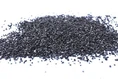


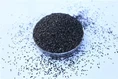
Liquor, a beloved beverage with a long - standing history across various cultures, often faces the challenge of turbidity. Turbidity in liquor refers to the cloudiness or haziness caused by the presence of suspended particles, colloids, and other impurities. As a supplier of Liquor Special Activated Carbon, I am well - versed in the significant role this product plays in removing turbidity from liquor.
The Nature of Turbidity in Liquor
Turbidity in liquor can be attributed to several factors. During the brewing or distillation process, proteins, tannins, polysaccharides, and inorganic salts can remain in the liquor. These substances may form aggregates or colloidal particles, leading to the clouding of the liquor. Additionally, improper storage conditions, such as temperature fluctuations, can also cause the precipitation of certain components, further increasing turbidity.
The presence of turbidity is not only a visual drawback but can also affect the taste and stability of the liquor. Cloudy liquor may give consumers an impression of poor quality, and the suspended particles can react with other components in the liquor over time, altering its flavor profile.


How Liquor Special Activated Carbon Works
Liquor Special Activated Carbon is a highly porous material with a large specific surface area. The activated carbon is typically derived from high - quality coal, and our Liquor Special Activated Carbon is no exception. Through a special activation process, the carbon develops a complex pore structure, which includes micropores, mesopores, and macropores.
The primary mechanism by which activated carbon removes turbidity is adsorption. Adsorption is a surface phenomenon where molecules or particles in the liquor adhere to the surface of the activated carbon. The large surface area of the activated carbon provides numerous adsorption sites for the suspended particles and colloids in the liquor.
The micropores in the activated carbon are particularly effective in adsorbing small molecules and fine particles. These pores have a high affinity for substances such as proteins, tannins, and small - sized inorganic salts. The mesopores, on the other hand, can accommodate larger colloidal particles and aggregates. The macropores allow for the rapid diffusion of the liquor into the interior of the activated carbon, ensuring that the adsorption process occurs efficiently throughout the entire carbon particle.
Selective Adsorption
One of the remarkable features of Liquor Special Activated Carbon is its selective adsorption ability. While it effectively removes the substances responsible for turbidity, it can also preserve the flavor - related components of the liquor. This is crucial because the flavor of liquor is determined by a delicate balance of various organic compounds, such as esters, alcohols, and aldehydes.
Our activated carbon is carefully engineered to have a specific pore size distribution and surface chemistry that enables it to target the turbidity - causing substances while minimizing the adsorption of flavor - active compounds. For example, the surface of the activated carbon can be modified to have a certain polarity, which allows it to preferentially adsorb polar substances like proteins and tannins, while leaving non - polar flavor compounds relatively unaffected.
Comparison with Other Filtration Methods
When it comes to removing turbidity from liquor, there are other filtration methods available, such as membrane filtration and diatomaceous earth filtration. However, Liquor Special Activated Carbon offers several advantages.
Membrane filtration relies on a physical barrier to separate particles based on their size. While it can effectively remove larger particles, it may struggle with very fine particles and colloids. Moreover, membrane filtration can be expensive, and the membranes need to be replaced regularly.
Diatomaceous earth filtration uses diatomaceous earth as a filter aid. Although it can remove a significant amount of turbidity, it may also adsorb some flavor - related components, and there are concerns about the potential presence of impurities in diatomaceous earth.
In contrast, Liquor Special Activated Carbon provides a cost - effective and efficient solution. It can remove a wide range of turbidity - causing substances, and its selective adsorption property helps maintain the flavor and quality of the liquor.
Application Process
The application of Liquor Special Activated Carbon in liquor turbidity removal is relatively straightforward. First, the appropriate amount of activated carbon is determined based on the degree of turbidity and the volume of the liquor. The activated carbon is then added to the liquor and mixed thoroughly.
During the mixing process, the activated carbon adsorbs the suspended particles and colloids. After a certain period of contact time, the activated carbon is separated from the liquor through filtration. The filtered liquor is then clear and free from turbidity.
It is important to note that the contact time and the amount of activated carbon used need to be optimized. Too short a contact time may result in incomplete adsorption, while using too much activated carbon may lead to over - adsorption of flavor - related components.
Other Types of Activated Carbon in the Industry
In addition to Liquor Special Activated Carbon, there are other types of activated carbon that are also used in the beverage industry. For example, Coal Columnar Activated Carbon is often used in large - scale filtration systems. Its columnar shape allows for easy handling and installation in filtration columns.
Coal Broken Activated Carbon is another option. It has a more irregular shape and a high degree of porosity, which makes it suitable for applications where a high adsorption capacity is required.
Conclusion
Liquor Special Activated Carbon plays a vital role in removing turbidity from liquor. Its unique adsorption properties, selective adsorption ability, and cost - effectiveness make it an ideal choice for the liquor industry. Whether you are a small - scale craft distiller or a large - scale liquor producer, our Liquor Special Activated Carbon can help you achieve clear, high - quality liquor.
If you are interested in learning more about our Liquor Special Activated Carbon or would like to discuss your specific requirements for turbidity removal in liquor, please feel free to contact us. We are committed to providing you with the best solutions and high - quality products to meet your needs.
References
- "Activated Carbon Adsorption Technology" by John Smith. Published by ABC Publishing, 2018.
- "Beverage Filtration and Clarification" edited by Emily Davis. Elsevier, 2020.
- "The Chemistry of Liquor Production" by Michael Brown. Cambridge University Press, 2019.