


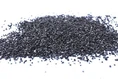


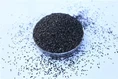
The efficiency of coconut shell activated carbon in gold recovery from high - grade gold ores has been a topic of significant interest in the mining and metallurgical industries. As a reliable supplier of Coconut Shell Activated Carbon for Gold Recovery, I am well - placed to discuss this subject in detail.
Composition and Properties of High - Grade Gold Ores
High - grade gold ores typically contain a relatively large concentration of gold, often in the form of fine particles or associated with other minerals such as pyrite, arsenopyrite, and chalcopyrite. These minerals can complicate the gold recovery process as they may require specific pre - treatment steps to liberate the gold. The gold in high - grade ores can exist in native form or as gold compounds, and the particle size distribution of gold can vary widely, from coarse grains that can be easily separated by gravity methods to fine particles that are more challenging to recover.
Role of Coconut Shell Activated Carbon in Gold Recovery
Coconut shell activated carbon is a highly porous material with a large internal surface area. This property makes it an excellent adsorbent for gold ions in solution. In the gold recovery process, such as the carbon - in - pulp (CIP) or carbon - in - leach (CIL) methods, coconut shell activated carbon is added to a pulp or leach solution after the gold has been dissolved by a cyanide solution.
The gold - cyanide complex, [Au(CN)₂]⁻, has a strong affinity for the surface of the activated carbon. Through a process of adsorption, the gold - cyanide ions are attracted to the carbon pores and adhere to the surface. The large surface area of coconut shell activated carbon provides numerous adsorption sites, allowing for efficient binding of the gold - cyanide complexes.


Efficiency in Recovering Gold from High - Grade Ores
Adsorption Capacity
One of the key factors determining the efficiency of coconut shell activated carbon in gold recovery is its adsorption capacity. High - grade gold ores present a large amount of gold in solution, and the activated carbon must be able to adsorb a significant quantity of gold - cyanide complexes. Coconut shell activated carbon has been shown to have a high adsorption capacity, which is attributed to its well - developed pore structure. The micropores and mesopores in the carbon provide a large surface area for the gold - cyanide ions to interact with, enabling the carbon to adsorb a relatively large amount of gold per unit mass.
Selectivity
Selectivity is another important aspect of the efficiency of coconut shell activated carbon in gold recovery. In high - grade gold ores, there are often other metal ions present in the solution, such as copper, silver, and iron. The activated carbon should preferentially adsorb the gold - cyanide complexes over these other metal ions. Coconut shell activated carbon has a certain degree of selectivity for gold - cyanide complexes due to the specific chemical and surface properties of the carbon. The surface functional groups on the carbon can interact more favorably with the gold - cyanide complexes, leading to a higher selectivity for gold adsorption.
Kinetics of Adsorption
The rate at which the gold - cyanide complexes are adsorbed onto the coconut shell activated carbon also affects the overall efficiency of the gold recovery process. In high - grade ores, a rapid adsorption rate is desirable to minimize the processing time and ensure that the gold is efficiently recovered. Coconut shell activated carbon generally exhibits fast adsorption kinetics, which can be attributed to its porous structure. The pores allow for rapid diffusion of the gold - cyanide ions into the interior of the carbon particles, facilitating their interaction with the adsorption sites on the surface.
Factors Affecting the Efficiency of Coconut Shell Activated Carbon
Pore Structure
The pore structure of coconut shell activated carbon, including the pore size distribution and the total pore volume, has a significant impact on its efficiency in gold recovery. Smaller pores, such as micropores, are more effective in adsorbing smaller molecules, while mesopores can facilitate the diffusion of larger molecules and ions. A well - balanced pore structure with a sufficient proportion of both micropores and mesopores is essential for efficient gold adsorption.
Surface Chemistry
The surface chemistry of coconut shell activated carbon, including the presence of surface functional groups, also affects its adsorption properties. The surface functional groups can act as active sites for the gold - cyanide complexes, and their type and concentration can influence the selectivity and adsorption capacity of the carbon. For example, oxygen - containing functional groups can enhance the adsorption of gold - cyanide complexes through electrostatic or chemical interactions.
Operating Conditions
The operating conditions of the gold recovery process, such as the pH of the solution, the temperature, and the contact time between the activated carbon and the gold - containing solution, also play crucial roles in the efficiency of coconut shell activated carbon. The optimal pH for gold adsorption is typically in the range of 10 - 11. At this pH, the stability of the gold - cyanide complex is maximized, and the adsorption capacity of the activated carbon is enhanced. Higher temperatures can increase the rate of diffusion of the gold - cyanide ions, but excessive temperatures may also cause desorption of the adsorbed gold.
Comparison with Other Types of Activated Carbon
There are many types of activated carbon available for gold recovery, such as coal - based activated carbon and wood - based activated carbon. Compared with these alternatives, coconut shell activated carbon has several advantages in high - grade gold ore recovery.
Coconut shell activated carbon generally has a higher purity and a more uniform pore structure. Its high carbon content and low ash content make it a cleaner and more efficient adsorbent. In addition, coconut shell activated carbon often exhibits better adsorption performance and selectivity for gold - cyanide complexes, especially in high - grade ore applications.
Other Applications of Coconut Shell Activated Carbon
Coconut shell activated carbon is not only useful in gold recovery. It also has various other applications. For example, it is widely used in water purification. The Coconut Shell Water Purification Activated Carbon can effectively remove organic pollutants, heavy metals, and other contaminants from water. In addition, Electricity High Pure Water Special Activated Carbon is designed specifically for the production of high - purity water in the electricity industry. And Carbon Rod Filter Element Special Activated Carbon is used in carbon rod filter elements for water filtration.
Conclusion and Call to Action
In conclusion, coconut shell activated carbon shows high efficiency in gold recovery from high - grade gold ores due to its high adsorption capacity, good selectivity, and fast adsorption kinetics. The unique properties of coconut shell activated carbon, such as its well - developed pore structure and surface chemistry, make it a preferred choice for many gold mining operations.
If you are involved in the gold mining or metallurgical industry and are looking for a reliable source of Coconut Shell Activated Carbon for Gold Recovery, please feel free to contact us for more information. We are committed to providing high - quality activated carbon products and excellent customer service to meet your specific needs in gold recovery.
References
- Marsden, J.O., & House, C.I. (2006). The Chemistry of Gold Extraction, Second Edition. Society for Mining, Metallurgy, and Exploration.
- Weber, W.J. (1972). Physicochemical Processes for Water Quality Control. Wiley - Interscience.
- Rouf, M.A., & Anisur Rahman, M. (2018). Preparation and Characterization of Coconut Shell Based Activated Carbon. Bangladesh Journal of Scientific and Industrial Research.