


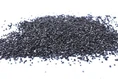


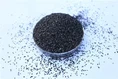
In the realm of environmental science and industrial waste management, the performance of tail liquid recycle activated carbon in the presence of multiple contaminants is a topic of significant interest. As a supplier of Tail Liquid Recycle Activated Carbon, I have witnessed firsthand the challenges and opportunities presented by this complex scenario.
Understanding Multiple Contaminants
Multiple contaminants in industrial tail liquids can stem from various sources, including manufacturing processes, chemical reactions, and waste disposal. These contaminants can range from heavy metals such as lead, mercury, and cadmium to organic compounds like pesticides, solvents, and dyes. Each type of contaminant poses unique challenges to the treatment process due to its chemical properties, solubility, and reactivity.
The co - existence of multiple contaminants often leads to synergistic or antagonistic effects. For example, some heavy metals can form complexes with organic ligands, altering their adsorption behavior on activated carbon. In addition, the presence of one contaminant may compete with others for adsorption sites on the activated carbon surface, affecting the overall removal efficiency.
Mechanisms of Tail Liquid Recycle Activated Carbon
Tail Liquid Recycle Activated Carbon is a highly porous material with a large surface area, which provides numerous adsorption sites for contaminants. The adsorption process mainly involves physical adsorption and chemical adsorption. Physical adsorption is based on van der Waals forces, which are relatively weak and reversible. Chemical adsorption, on the other hand, involves the formation of chemical bonds between the contaminants and the activated carbon surface, resulting in a more stable and irreversible adsorption.
When multiple contaminants are present, the activated carbon needs to selectively adsorb the target contaminants while minimizing the adsorption of non - target substances. The pore size distribution of the activated carbon plays a crucial role in this process. Different contaminants have different molecular sizes, and the activated carbon with appropriate pore sizes can effectively trap the contaminants. For instance, smaller pores are more suitable for adsorbing small - molecule contaminants, while larger pores can accommodate larger organic molecules.
Performance Evaluation
The performance of Tail Liquid Recycle Activated Carbon in the presence of multiple contaminants can be evaluated through several key parameters.
Adsorption Capacity
The adsorption capacity refers to the amount of contaminants that the activated carbon can adsorb per unit mass. In a multi - contaminant system, the total adsorption capacity is affected by the competition among different contaminants. For example, if two contaminants have similar molecular sizes and chemical properties, they will compete for the same adsorption sites, reducing the adsorption capacity for each contaminant.
Selectivity
Selectivity is an important factor when dealing with multiple contaminants. A high - selectivity activated carbon can preferentially adsorb the target contaminants, even in the presence of other non - target substances. This can be achieved by modifying the surface chemistry of the activated carbon. For example, introducing specific functional groups on the activated carbon surface can enhance the affinity for certain contaminants.
Regeneration Efficiency
After adsorption, the activated carbon needs to be regenerated for reuse. In a multi - contaminant system, the regeneration process can be more complex due to the different desorption behaviors of various contaminants. Some contaminants may be strongly adsorbed and difficult to desorb, which can reduce the regeneration efficiency and the lifespan of the activated carbon.
Case Studies
Let's take a look at some real - world case studies to illustrate the performance of Tail Liquid Recycle Activated Carbon in the presence of multiple contaminants.
In a plating industry, the tail liquid contains heavy metals such as copper, nickel, and chromium, as well as organic additives. Our Tail Liquid Recycle Activated Carbon was used to treat this complex waste liquid. By carefully selecting the activated carbon with appropriate pore size distribution and surface properties, we were able to achieve high removal efficiency for both heavy metals and organic contaminants. The treated water met the discharge standards, and the activated carbon could be regenerated and reused multiple times.
Another case is in the gold mining industry. The tail liquid often contains gold ions, as well as other metal ions and organic matter. Our Nutshell Gold Recovery Carbon has shown excellent performance in selectively adsorbing gold ions from the multi - contaminant solution. The high selectivity of the activated carbon allows for efficient gold recovery while minimizing the adsorption of other non - target substances.
Comparison with Other Treatment Methods
Compared with other treatment methods, such as chemical precipitation, ion exchange, and membrane filtration, Tail Liquid Recycle Activated Carbon has several advantages in dealing with multiple contaminants.
Chemical precipitation can effectively remove heavy metals, but it often generates a large amount of sludge, which requires further treatment and disposal. Ion exchange is suitable for removing specific ions, but it may not be effective for organic contaminants. Membrane filtration can separate contaminants based on their molecular sizes, but it is prone to fouling, especially in the presence of multiple contaminants.
Tail Liquid Recycle Activated Carbon, on the other hand, can adsorb a wide range of contaminants, including both inorganic and organic substances. It is relatively easy to operate and can be regenerated and reused, reducing the overall treatment cost.
Factors Affecting Performance
Several factors can affect the performance of Tail Liquid Recycle Activated Carbon in the presence of multiple contaminants.
pH Value
The pH value of the tail liquid can significantly affect the adsorption behavior of contaminants. For example, the solubility and speciation of heavy metals are highly dependent on the pH. At low pH values, some heavy metals may exist in the form of cations, which are more easily adsorbed by the activated carbon. At high pH values, the heavy metals may form hydroxides and precipitate, reducing their adsorption on the activated carbon.
Temperature
Temperature can also influence the adsorption process. Generally, an increase in temperature can increase the kinetic energy of the contaminants, promoting the adsorption rate. However, it may also reduce the adsorption capacity due to the increased desorption rate. Therefore, an optimal temperature needs to be determined for different contaminants and activated carbon systems.
Contact Time
The contact time between the activated carbon and the tail liquid is crucial for achieving high adsorption efficiency. Sufficient contact time allows the contaminants to diffuse into the pores of the activated carbon and reach the adsorption sites. In a multi - contaminant system, different contaminants may have different diffusion rates, so an appropriate contact time needs to be selected to ensure the adsorption of all target contaminants.
Future Developments
As the environmental regulations become more stringent, the demand for more efficient Tail Liquid Recycle Activated Carbon in dealing with multiple contaminants will continue to grow. Future developments may focus on the following aspects:
Surface Modification
Further research on surface modification techniques can enhance the selectivity and adsorption capacity of the activated carbon. For example, using nanomaterials to modify the activated carbon surface can introduce new functional groups and improve the adsorption performance.


Hybrid Treatment Systems
Combining Tail Liquid Recycle Activated Carbon with other treatment methods, such as advanced oxidation processes or biological treatment, can achieve better treatment results in dealing with multiple contaminants. The hybrid systems can take advantage of the strengths of different treatment methods and overcome their limitations.
Conclusion
In conclusion, Tail Liquid Recycle Activated Carbon has shown promising performance in the presence of multiple contaminants. Its large surface area, diverse adsorption mechanisms, and reusability make it a viable option for treating complex industrial tail liquids. However, to fully realize its potential, further research and development are needed to optimize its performance, especially in terms of selectivity, regeneration efficiency, and resistance to multiple contaminants.
If you are interested in our Tail Liquid Recycle Activated Carbon or Electroplate Special Activated Carbon, please feel free to contact us for more information and to discuss your specific requirements. We are committed to providing high - quality products and solutions to meet your environmental treatment needs.
References
- Foo, K. Y., & Hameed, B. H. (2010). Insights into the modeling of adsorption isotherm systems. Chemical Engineering Journal, 156(1), 2 - 10.
- Huang, C. P., & Weber, W. J. (1970). Kinetics of adsorptive removal of pollutants from aqueous solutions by activated carbon. Environmental Science & Technology, 4(2), 224 - 232.
- Crini, G. (2006). Non - conventional low - cost adsorbents for dye removal: A review. Bioresource Technology, 97(1), 1061 - 1085.