


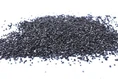


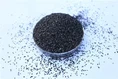
Nut shell activated carbon is a high - quality adsorbent material widely used in various industries due to its excellent adsorption performance, large specific surface area, and high mechanical strength. One of the important physical properties of nut shell activated carbon is its density, which has a significant impact on its performance and application. In this blog, as a nut shell activated carbon supplier, I will explore the density of nut shell activated carbon in detail.
Understanding Density in the Context of Activated Carbon
Density is a measure of mass per unit volume. For nut shell activated carbon, there are mainly two types of density that are commonly considered: bulk density and true density.
Bulk density refers to the mass of a unit volume of activated carbon in its loose, uncompacted state. It includes the volume of the carbon particles themselves as well as the void spaces between the particles. Bulk density is an important parameter for transportation and storage, as it helps determine how much activated carbon can be packed into a given container. A lower bulk density means that more volume is occupied by voids, which can be beneficial in some applications where a large amount of gas or liquid needs to flow through the activated carbon bed.
True density, on the other hand, is the density of the carbon material itself, excluding the void spaces. It represents the mass per unit volume of the solid carbon matrix. True density is mainly related to the internal structure and composition of the activated carbon. A higher true density may indicate a more compact and dense carbon structure, which could potentially affect the adsorption capacity and kinetics.


Factors Affecting the Density of Nut Shell Activated Carbon
Raw Materials
The type of nut shell used as the raw material has a significant impact on the density of the resulting activated carbon. Different nut shells have different compositions and structures. For example, coconut shells are known to produce activated carbon with relatively high mechanical strength and a certain density. Coconut shell - based activated carbon often has a relatively consistent structure, which can lead to a more predictable density range. Walnut shells, on the other hand, may result in activated carbon with a different density due to their unique chemical composition and cellular structure.
Activation Process
The activation process is crucial in determining the density of nut shell activated carbon. There are two main activation methods: physical activation and chemical activation.
In physical activation, the nut shells are first carbonized at high temperatures in an inert atmosphere and then activated with steam or carbon dioxide. During this process, the removal of volatile substances and the formation of pores can affect the density. A more intense activation process, with higher activation temperatures or longer activation times, can lead to the creation of more pores, which generally decreases the bulk density as the void volume increases.
Chemical activation involves the use of chemicals such as zinc chloride, phosphoric acid, or potassium hydroxide. The chemical agent reacts with the carbonaceous material during the activation process, creating a highly porous structure. The choice of chemical agent, its concentration, and the activation conditions can all influence the density of the final product. For example, a higher concentration of the chemical agent may result in a more porous structure and a lower bulk density.
Pore Structure
The pore structure of nut shell activated carbon is closely related to its density. Activated carbon has a hierarchical pore structure, including micropores (less than 2 nm in diameter), mesopores (2 - 50 nm in diameter), and macropores (greater than 50 nm in diameter). The proportion and distribution of these pores can affect the density. A higher proportion of micropores may increase the true density as the carbon matrix is more compactly arranged around these small pores. In contrast, a larger number of macropores or mesopores can increase the void volume and decrease the bulk density.
Typical Density Ranges of Nut Shell Activated Carbon
The bulk density of nut shell activated carbon typically ranges from 0.3 - 0.5 g/cm³. Coconut shell - based activated carbon usually has a bulk density in the range of 0.4 - 0.5 g/cm³, which is relatively higher compared to some other nut shell - derived activated carbons. This is because coconut shells have a relatively dense and uniform structure, which results in a more compact packing of the activated carbon particles.
The true density of nut shell activated carbon is generally around 2.0 - 2.2 g/cm³. This value is mainly determined by the carbonaceous nature of the material and is relatively consistent across different types of nut shell activated carbons, although it can be slightly affected by the activation process and the presence of impurities.
Importance of Density in Applications
Water Purification
In water purification applications, the density of nut shell activated carbon plays an important role. Water Purification AG - Activated Carbon with an appropriate density is crucial for efficient filtration. A lower bulk density allows for better water flow through the activated carbon bed, reducing the pressure drop and improving the overall filtration efficiency. At the same time, the true density affects the adsorption capacity. A well - structured activated carbon with a suitable true density can provide a large surface area for the adsorption of contaminants such as organic compounds, heavy metals, and chlorine.
Petrochemical Industry
In the petrochemical industry, Petrochemical Special Activated Carbon is used for various purposes, such as the purification of petroleum products and the removal of impurities from gases. The density of the activated carbon affects its performance in these applications. A higher bulk density may be preferred in some cases where a more compact packing of the activated carbon is required to ensure better contact with the petrochemical substances. The true density also influences the adsorption of specific contaminants present in the petrochemical products.
Tail Liquid Recycling
For Tail Liquid Recycle Activated Carbon, density is an important factor in optimizing the recycling process. A suitable bulk density ensures that the activated carbon can be easily mixed with the tail liquid and that the flow of the liquid through the carbon bed is not hindered. The true density affects the ability of the activated carbon to adsorb and remove valuable substances or contaminants from the tail liquid, improving the efficiency of the recycling process.
Measuring the Density of Nut Shell Activated Carbon
To measure the bulk density of nut shell activated carbon, a known volume of the activated carbon is carefully poured into a container without compaction. The mass of the activated carbon in the container is then measured, and the bulk density is calculated by dividing the mass by the volume.
The true density is more difficult to measure directly. One common method is the pycnometer method. A small amount of activated carbon is placed in a pycnometer, and a liquid (usually a non - adsorbing liquid such as mercury or helium) is used to fill the remaining volume. By measuring the volume of the liquid displaced and the mass of the activated carbon, the true density can be calculated.
Conclusion
The density of nut shell activated carbon, including both bulk density and true density, is a crucial property that is affected by various factors such as raw materials, activation processes, and pore structures. Understanding the density of nut shell activated carbon is essential for its proper application in different industries, including water purification, petrochemical, and tail liquid recycling.
As a nut shell activated carbon supplier, we are committed to providing high - quality products with well - controlled density and other properties. If you are interested in our nut shell activated carbon products or have any questions about the density and its application, please feel free to contact us for procurement and further discussions. We are looking forward to working with you to meet your specific needs.
References
- "Activated Carbon: Adsorption from the Gas Phase" by Klaus Kärger, Jörg Rother, and Frank Stallmach.
- "Water Treatment Unit Processes: Physical and Chemical" by David W. Hendricks.
- "Petroleum Refining: Technology and Economics" by James G. Speight.