


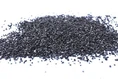


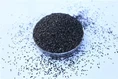
Hey there! As a supplier of Coconut Shell Water Purification Activated Carbon, I often get asked about the density of this amazing product. So, let's dive right in and explore what the density of coconut shell water purification activated carbon is all about.


First off, let's understand what activated carbon is. Activated carbon is a highly porous material that has a large surface area. This property makes it excellent at adsorbing various contaminants from water. Coconut shell activated carbon, in particular, is derived from coconut shells, which are a renewable and sustainable resource. It's known for its high purity, low ash content, and excellent adsorption capacity.
Now, when it comes to density, it's an important characteristic of activated carbon. Density refers to the mass of a substance per unit volume. In the case of coconut shell water purification activated carbon, the density can vary depending on several factors.
One of the main factors affecting the density is the activation process. There are different methods of activating coconut shells to produce activated carbon, such as physical activation and chemical activation. Physical activation typically involves heating the coconut shells in the presence of an oxidizing gas, while chemical activation uses chemicals like phosphoric acid or zinc chloride. The activation method can influence the pore structure and the overall density of the resulting activated carbon.
Another factor is the particle size of the activated carbon. Activated carbon can come in different particle sizes, ranging from fine powder to larger granules. Generally, finer particles tend to have a higher bulk density because they can pack more tightly together. On the other hand, larger granules may have a lower bulk density due to the spaces between the particles.
The density of coconut shell water purification activated carbon is usually expressed in two ways: bulk density and true density.
Bulk density is the mass of the activated carbon per unit volume of the loose material, including the spaces between the particles. It's a measure of how much the activated carbon will weigh when it's poured into a container. The bulk density of coconut shell activated carbon typically ranges from about 0.4 to 0.6 grams per cubic centimeter (g/cm³). This relatively low bulk density is beneficial because it means that a relatively large volume of activated carbon can be used in a water purification system without adding too much weight.
True density, on the other hand, is the mass of the activated carbon per unit volume of the solid material, excluding the pores and the spaces between the particles. The true density of coconut shell activated carbon is generally higher than the bulk density, usually around 2.0 to 2.2 g/cm³. The true density gives an indication of the actual mass of the carbon material itself.
So, why does the density matter in water purification? Well, the density can affect the performance and efficiency of the activated carbon in a water purification system. For example, a lower bulk density can allow for better water flow through the activated carbon bed, reducing the pressure drop and improving the overall treatment capacity. On the other hand, a higher true density can indicate a more dense and compact carbon structure, which may be beneficial for certain applications where a higher adsorption capacity is required.
In addition to its density, coconut shell water purification activated carbon has many other advantages. It's highly effective at removing a wide range of contaminants from water, including organic compounds, chlorine, heavy metals, and odors. It's also environmentally friendly and can be easily regenerated and reused, making it a cost - effective solution for water treatment.
At our company, we offer different grades and particle sizes of coconut shell water purification activated carbon to meet the diverse needs of our customers. Whether you're looking for Electricity High Pure Water Special Activated Carbon for high - purity water applications, Carbon Rod Filter Element Special Activated Carbon for filter elements, or Utility Boiler Raw Water Purification Activated Carbon for boiler water treatment, we've got you covered.
Our activated carbon is produced using state - of - the - art manufacturing processes to ensure consistent quality and performance. We conduct strict quality control tests to guarantee that our products meet the highest standards.
If you're in the market for coconut shell water purification activated carbon, we'd love to have a chat with you. Whether you're a small - scale water treatment plant or a large industrial facility, we can provide you with the right product and the best advice. Contact us today to start a discussion about your water purification needs and let's find the perfect activated carbon solution for you.
In conclusion, the density of coconut shell water purification activated carbon is an important characteristic that can impact its performance in water treatment. Understanding the difference between bulk density and true density, as well as the factors that affect them, can help you make an informed decision when choosing the right activated carbon for your application. With our high - quality coconut shell activated carbon products, you can be confident in achieving effective and efficient water purification.
References
- "Activated Carbon: Adsorption from the Gas Phase and from Solution" by F. Rodriguez-Reinoso
- "Water Treatment Unit Processes: Physical and Chemical" by David W. Hendricks