


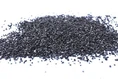

Hey there! As a supplier of Grease Bleaching Activated Carbon, I often get asked about various technical aspects of our product. One question that pops up quite frequently is, "What is the ash content of grease bleaching activated carbon?" Well, let's dive right into it and break it down in a way that's easy to understand.
First off, let's talk about what activated carbon is and why it's used in grease bleaching. Activated carbon is a highly porous material with a large surface area. This unique structure allows it to adsorb impurities, colorants, and other unwanted substances from various liquids, including greases. In the context of grease bleaching, the main goal is to remove the color and odor from the grease, making it more suitable for further processing or end - use applications.
Now, the ash content of activated carbon is a crucial parameter. Ash is the inorganic residue left behind after the carbon is burned at a high temperature. It mainly consists of minerals such as silica, alumina, iron oxide, and other trace elements. These minerals can come from the raw materials used to produce the activated carbon or from the manufacturing process itself.
For grease bleaching activated carbon, a low ash content is generally preferred. Why? Well, a high ash content can have several negative impacts. Firstly, it can reduce the adsorption capacity of the activated carbon. The ash particles can block the pores of the carbon, preventing the grease impurities from being effectively adsorbed. This means that you might need to use more activated carbon to achieve the same level of bleaching, which can increase costs.
Secondly, high - ash activated carbon can introduce unwanted contaminants into the grease. The minerals in the ash can react with the grease components, leading to changes in the chemical properties of the grease. This can affect the quality and stability of the final product. For example, some metal oxides in the ash can catalyze oxidation reactions in the grease, causing it to become rancid more quickly.
So, what is an acceptable ash content for grease bleaching activated carbon? Generally, an ash content of less than 5% is considered good for most grease bleaching applications. However, in some high - end or sensitive applications, an even lower ash content of 1 - 2% might be required.
As a supplier, we take great care to control the ash content of our grease bleaching activated carbon. We start by selecting high - quality raw materials. For example, coconut shell is a popular choice for producing activated carbon with a low ash content. Coconut shell has a relatively pure carbon structure and contains fewer minerals compared to other raw materials like coal or wood.
During the manufacturing process, we use advanced purification techniques to remove as much ash as possible. This includes washing, acid treatment, and high - temperature activation steps. These processes help to break down and remove the inorganic impurities, resulting in a high - quality activated carbon with a low ash content.
In addition to our grease bleaching activated carbon, we also offer other types of activated carbon products. For instance, if you're in the tobacco industry, you might be interested in our Cigarette Filter Special Activated Carbon. This product is specifically designed to adsorb harmful substances in cigarette smoke, providing a cleaner and healthier smoking experience.
If you're involved in gold recovery, our Coconut Shell Activated Carbon for Gold Recovery is a great option. It has a high adsorption capacity for gold ions and can help you extract gold more efficiently from ore or waste solutions.
And for those in the water filtration industry, our Carbon Rod Filter Element Special Activated Carbon is ideal. It can effectively remove organic pollutants, chlorine, and other contaminants from water, ensuring clean and safe drinking water.
We understand that every customer has unique requirements, and we're committed to providing customized solutions. Whether you need a specific ash content, a particular particle size, or a special adsorption capacity, we can work with you to develop the right product.
If you're interested in our grease bleaching activated carbon or any of our other products, we'd love to hear from you. We can provide samples for you to test and evaluate. And our team of experts is always available to answer your questions and offer technical support. Don't hesitate to reach out if you have any inquiries about purchasing or if you want to discuss your specific needs. We're here to help you find the best activated carbon solution for your business.


In conclusion, the ash content of grease bleaching activated carbon is an important factor that can significantly impact its performance and the quality of the final product. By choosing a low - ash activated carbon from a reliable supplier, you can ensure efficient and high - quality grease bleaching. So, if you're in the market for grease bleaching activated carbon, give us a chance to show you what we can do.
References
- "Activated Carbon: Surface Chemistry, Adsorption Kinetics, and Applications" by A. B. Fuertes and M. Sevilla
- "Handbook of Activated Carbon" edited by R. Bansal and A. Goyal