




Hey there! As a supplier of Common Honeycomb Activated Carbon, I've had my fair share of experiences and insights into what affects its adsorption performance. In this blog, I'm gonna break down the key factors that you should know about.
1. Pore Structure
The pore structure of Common Honeycomb Activated Carbon is like the blueprint of a building - it determines how well it can do its job. There are three main types of pores: micropores, mesopores, and macropores.
Micropores, which are less than 2 nanometers in diameter, play a crucial role in adsorbing small molecules. They provide a large surface area for the adsorption process. For example, when it comes to adsorbing volatile organic compounds (VOCs) like benzene and toluene, the micropores act like tiny traps, capturing these small molecules and holding them tightly.
Mesopores, with diameters ranging from 2 to 50 nanometers, are important for the transport of adsorbates. They act as channels that allow the molecules to move more easily into the carbon structure. Without well - developed mesopores, the adsorption process can be slow, as the molecules might have a hard time reaching the micropores.
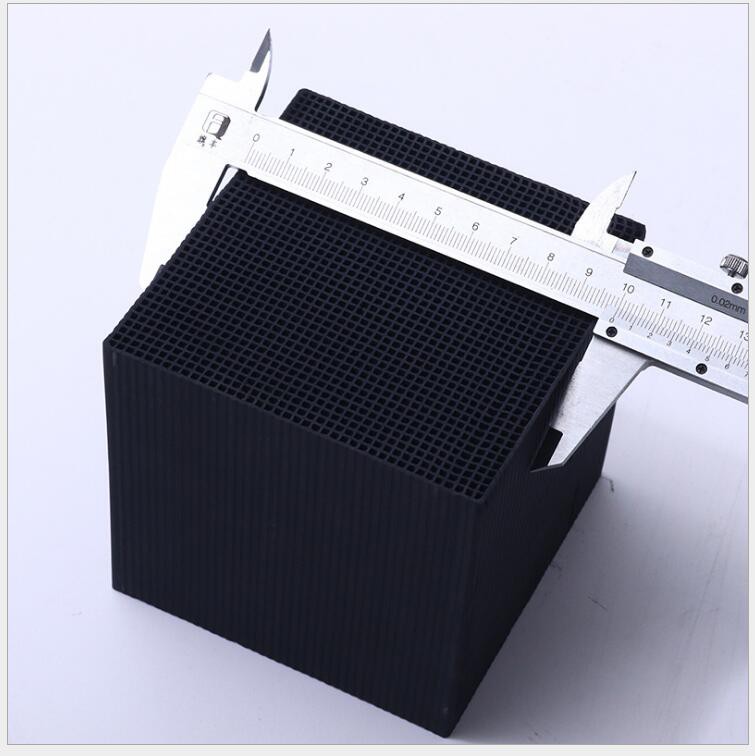
Macropores, which are larger than 50 nanometers, are mainly responsible for the initial uptake of adsorbates. They act as entry points, allowing the gas or liquid to quickly enter the carbon structure. A good balance of these three types of pores is essential for optimal adsorption performance. You can check out more about Common Honeycomb Activated Carbon on our website to understand how its pore structure is optimized.
2. Surface Chemistry
The surface chemistry of the activated carbon also has a significant impact on its adsorption performance. The surface of the carbon can have various functional groups such as hydroxyl, carboxyl, and carbonyl groups.
These functional groups can interact with the adsorbates in different ways. For instance, if the adsorbate is a polar molecule, it can form hydrogen bonds or other electrostatic interactions with the polar functional groups on the carbon surface. This enhances the adsorption capacity.
On the other hand, if the surface is modified to have a more hydrophobic nature, it can be more effective in adsorbing non - polar substances. For example, in the treatment of oil - contaminated water, a hydrophobic activated carbon can selectively adsorb the oil molecules while repelling water.
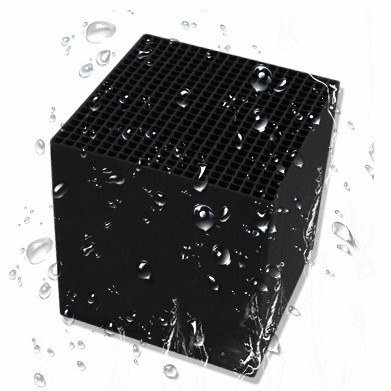
We also offer Waterproof Honeycomb Activated Carbon, which has a special surface chemistry treatment to make it resistant to water and still maintain good adsorption performance for other substances.
3. Adsorbate Properties
The properties of the adsorbate itself are another important factor. The size, shape, and polarity of the adsorbate molecules can all affect how well they are adsorbed by the activated carbon.
Smaller molecules are generally easier to adsorb because they can more easily enter the pores of the carbon. For example, methane, which is a small molecule, can be adsorbed more readily than larger hydrocarbon molecules.
The shape of the molecule also matters. Some molecules might have a shape that allows them to fit more snugly into the pores of the carbon, leading to stronger adsorption.
Polarity is also a key factor. As mentioned earlier, polar adsorbates interact better with a carbon surface that has polar functional groups, while non - polar adsorbates are better adsorbed by a hydrophobic surface.
4. Temperature
Temperature can have a significant impact on the adsorption process. In general, adsorption is an exothermic process, which means it releases heat. As the temperature increases, the adsorption capacity of the activated carbon usually decreases.
This is because the increased temperature gives the adsorbate molecules more kinetic energy, making it easier for them to break free from the adsorption sites on the carbon surface. However, in some cases, a slightly elevated temperature can actually improve the adsorption rate. This is because the increased temperature can enhance the diffusion of the adsorbate molecules into the pores of the carbon.
So, when using Common Honeycomb Activated Carbon, it's important to consider the temperature of the environment where it will be used. If the temperature is too high, you might need to adjust the amount of carbon or consider using a different type of carbon that is more temperature - resistant.
5. Humidity
Humidity can also affect the adsorption performance of activated carbon. Water molecules in the air can compete with the adsorbate molecules for the adsorption sites on the carbon surface.
In high - humidity environments, the activated carbon might adsorb a significant amount of water, which can reduce its capacity to adsorb other substances. This is especially a problem when dealing with hydrophilic activated carbons.
However, our Waterproof Honeycomb Activated Carbon is designed to minimize the impact of humidity. It has a special coating or treatment that makes it less likely to adsorb water, allowing it to maintain its adsorption performance for other target substances even in humid conditions.
6. Contact Time
The contact time between the activated carbon and the adsorbate is crucial. For the adsorption process to occur effectively, the adsorbate molecules need enough time to come into contact with the carbon surface and diffuse into the pores.
If the contact time is too short, the adsorption might not reach its maximum capacity. For example, in a gas - phase adsorption system, if the gas flow rate is too high, the gas might pass through the carbon bed too quickly, and not all the adsorbate molecules will have a chance to be adsorbed.
On the other hand, if the contact time is too long, it might not be practical in industrial applications. So, finding the right balance is important. This can be achieved by adjusting the flow rate of the gas or liquid, the size of the carbon bed, and other operating parameters.
7. Carbon Loading
The amount of activated carbon used, or the carbon loading, also affects the adsorption performance. If the carbon loading is too low, there might not be enough adsorption sites to capture all the adsorbate molecules. This can lead to incomplete adsorption and poor treatment efficiency.
On the other hand, if the carbon loading is too high, it can cause problems such as increased pressure drop in a gas - phase system or higher costs. So, it's important to determine the optimal carbon loading based on the specific application and the concentration of the adsorbate.
In conclusion, there are many factors that can affect the adsorption performance of Common Honeycomb Activated Carbon. Understanding these factors can help you make the most of this amazing material. Whether you're dealing with air purification, water treatment, or other applications, choosing the right type of carbon and optimizing the operating conditions can significantly improve the adsorption efficiency.
If you're interested in purchasing Common Honeycomb Activated Carbon or need more information about its performance and applications, feel free to reach out to us. We're here to help you find the best solution for your needs.
References
- Yang, R. T. (1987). Gas Separation by Adsorption Processes. Butterworth Publishers.
- Foley, H. C. (1995). Introduction to Zeolite Science and Practice. Elsevier.
- Crittenden, J. C., Trussell, R. R., Hand, D. W., Howe, K. J., & Tchobanoglous, G. (2012). Water Treatment: Principles and Design. John Wiley & Sons.