


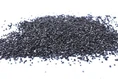

As a supplier of nut shell activated carbon, I often encounter questions from customers regarding the food - grade nature of our product. In this blog, I will delve into the details of whether nut shell activated carbon can be considered food - grade, exploring its production, characteristics, and applications in the food industry.
Production of Nut Shell Activated Carbon
Nut shell activated carbon is produced from various nut shells, such as coconut shells, walnut shells, and almond shells. The production process typically involves two main steps: carbonization and activation.
Carbonization is the first step, where the nut shells are heated in an oxygen - limited environment. This process converts the organic matter in the nut shells into carbonaceous material. The temperature and duration of carbonization can significantly affect the properties of the resulting carbon. For example, a higher carbonization temperature generally leads to a more porous structure, which is beneficial for the subsequent activation process.
The activation step follows carbonization. There are two common activation methods: physical activation and chemical activation. Physical activation involves heating the carbonized material in the presence of an oxidizing gas, such as steam or carbon dioxide. This process creates a network of pores within the carbon, increasing its surface area. Chemical activation, on the other hand, uses chemicals like phosphoric acid or potassium hydroxide to react with the carbonized material. Chemical activation can produce activated carbon with a higher pore volume and a more uniform pore size distribution compared to physical activation.
Characteristics of Nut Shell Activated Carbon
One of the key characteristics of nut shell activated carbon is its high surface area. A large surface area provides more sites for adsorption, allowing the activated carbon to effectively remove impurities from liquids and gases. Nut shell activated carbon typically has a surface area ranging from 800 to 1500 square meters per gram, depending on the production method and raw materials used.
Another important characteristic is its pore structure. Nut shell activated carbon has a well - developed pore structure, which includes micropores, mesopores, and macropores. Micropores are very small pores with a diameter less than 2 nanometers, and they are mainly responsible for the adsorption of small molecules. Mesopores have a diameter between 2 and 50 nanometers, and they play a role in the diffusion of larger molecules. Macropores, with a diameter greater than 50 nanometers, facilitate the initial entry of molecules into the activated carbon.
Nut shell activated carbon also has good mechanical strength and abrasion resistance. This makes it suitable for use in various applications where the activated carbon may be subjected to mechanical stress, such as in fixed - bed adsorption columns or fluidized - bed reactors.
Food - Grade Requirements
For nut shell activated carbon to be considered food - grade, it must meet certain strict requirements. These requirements are mainly related to the purity of the activated carbon and the absence of harmful substances.
In terms of purity, food - grade nut shell activated carbon should be free from contaminants such as heavy metals (e.g., lead, mercury, cadmium), pesticides, and other toxic chemicals. The production process must be carefully controlled to ensure that the raw materials are clean and that no harmful substances are introduced during carbonization and activation.
The activated carbon should also comply with relevant food safety regulations. For example, in the United States, the Food and Drug Administration (FDA) has specific regulations regarding the use of activated carbon in food applications. The activated carbon must be produced in accordance with Good Manufacturing Practices (GMP) to ensure its safety and quality.
Applications in the Food Industry
When nut shell activated carbon meets the food - grade requirements, it can be used in a variety of food industry applications.
Beverage Processing
In the beverage industry, nut shell activated carbon is used for the purification of water and the removal of impurities from beverages. For example, it can be used to remove color, odor, and taste - causing substances from fruit juices, soft drinks, and alcoholic beverages. The activated carbon adsorbs organic compounds, such as polyphenols and volatile organic compounds, which can affect the quality and stability of the beverages. You can find more information about our water purification products at Water Purification AG - Activated Carbon.
Sugar Refining
In sugar refining, nut shell activated carbon is used to decolorize sugar solutions. The activated carbon adsorbs the colored impurities in the sugar solution, resulting in a purer and more white - colored sugar product. It can also remove other impurities, such as odor - causing substances and trace metals, improving the overall quality of the sugar.
Edible Oil Purification
For edible oil purification, nut shell activated carbon can be used to remove free fatty acids, pigments, and other impurities from the oil. This helps to improve the clarity, stability, and flavor of the edible oil. The activated carbon selectively adsorbs the unwanted substances while leaving the beneficial components of the oil intact.
Our Company's Approach to Food - Grade Nut Shell Activated Carbon
As a supplier of nut shell activated carbon, we are committed to producing high - quality food - grade products. We source our raw materials from reliable suppliers and conduct strict quality control throughout the production process.
Our production facilities are equipped with advanced equipment and technology to ensure the consistent quality of our activated carbon. We use state - of - the - art testing methods to analyze the purity and performance of our products, including tests for heavy metals, ash content, and adsorption capacity.
We also have a team of experienced professionals who are dedicated to researching and developing new products and improving our production processes. This allows us to meet the ever - changing needs of our customers in the food industry.
Other Applications of Nut Shell Activated Carbon
Apart from food - grade applications, nut shell activated carbon has a wide range of other applications.


Gold Recovery
In the mining industry, nut shell activated carbon is used for gold recovery. The activated carbon has a high affinity for gold ions, and it can adsorb gold from cyanide solutions. Our Nutshell Gold Recovery Carbon is specifically designed for this application, with excellent adsorption capacity and mechanical strength.
Air Purification
In air purification, nut shell activated carbon is used to remove pollutants and odors from the air. It can adsorb volatile organic compounds (VOCs), such as formaldehyde, benzene, and toluene, as well as other harmful gases. You can learn more about our air purification products at Air Purification Activated Carbon.
Conclusion
In conclusion, nut shell activated carbon can be food - grade when it meets the strict purity and safety requirements. Our company is dedicated to producing high - quality food - grade nut shell activated carbon for the food industry, as well as other high - performance activated carbon products for various applications.
If you are interested in our nut shell activated carbon products, whether for food - grade applications or other uses, we invite you to contact us for a detailed discussion. We are ready to provide you with the best solutions and high - quality products to meet your specific needs.
References
- "Activated Carbon: Adsorption from Solution" by F. Rodriguez - Reinoso
- "Carbon Materials for Advanced Technologies" edited by M. S. Dresselhaus, G. Dresselhaus, and A. J. Franklin
- Food and Drug Administration (FDA) regulations on food - grade activated carbon