


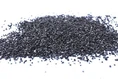


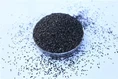
Alright, so you're probably sitting there wondering, "Is coconut shell water purification activated carbon a good choice for removing iron from water?" As a supplier of Coconut Shell Water Purification Activated Carbon, I've dealt with this question a ton, and I'm stoked to break it down for you.
First off, let's talk about iron in water. It's a pretty common issue. You might notice that your water has a metallic taste, or it could be leaving orange - brown stains on your sinks, toilets, and clothes. That's iron for you. And who wants to deal with that? There are different forms of iron in water, mainly ferrous iron (dissolved in water) and ferric iron (which forms a solid and makes the water look cloudy).


Now, what makes coconut shell activated carbon stand out? Well, coconut shell is a natural source, and when it's turned into activated carbon, it's got some pretty sweet properties. Activated carbon is made by heating the coconut shell in the absence of air, creating a whole bunch of tiny pores. These pores give it a huge surface area. Just imagine it like a tiny sponge on a super - microscopic level.
When water passes through this coconut shell activated carbon, those pores act like little traps. For iron removal, it's a bit more complicated than just trapping it like some other contaminants. Ferric iron, which is already in a solid form, can get physically trapped in those pores. But ferrous iron is trickier because it's dissolved.
One thing to note is that coconut shell activated carbon on its own might not be the be - all and end - all for iron removal. It can help with the physical removal of ferric iron particles. However, for ferrous iron, additional steps are usually needed. Often, the water needs to be pre - treated to convert the ferrous iron into ferric iron. This can be done through oxidation methods, like using air or chemicals. Once the iron is in the ferric form, the coconut shell activated carbon can do a better job of filtering it out.
But here's the deal: the effectiveness of coconut shell activated carbon for iron removal also depends on a few factors. The first is the quality of the activated carbon. As a supplier, I can tell you that the better the manufacturing process, the more effective the carbon will be. We make sure our Coconut Shell Water Purification Activated Carbon is of top - notch quality, with a high pore volume and a large surface area to maximize its filtering capabilities.
Another factor is the contact time. The longer the water is in contact with the activated carbon, the more opportunity there is for the iron to be removed. This means that the design of the water purification system matters. A well - designed system will ensure that the water flows through the activated carbon slowly enough for proper filtration.
The pH of the water is also crucial. The ideal pH for iron removal using activated carbon is usually in the slightly acidic to neutral range. If the water is too alkaline or too acidic, it can affect the way the iron interacts with the activated carbon, and the filtration efficiency might go down.
Now, let's compare it with other methods of iron removal. There are chemical treatment methods, like using iron - specific chemicals to precipitate the iron out of the water. But these chemicals can be expensive and might leave behind other residues in the water. And then there are ion - exchange resins. While they can be effective for iron removal, they also need to be regenerated regularly, which can be a hassle and cost - intensive.
Coconut shell activated carbon, on the other hand, is a more natural and cost - effective option in the long run. It's also environmentally friendly, as coconut shells are a renewable resource. After all, coconuts grow on trees, and those trees keep producing more coconuts year after year.
In some cases, coconut shell activated carbon can be used in combination with other filtration methods. For example, it can be part of a multi - stage filtration system. First, the water can go through a pre - filter to remove larger particles and then through the activated carbon to target the iron. After that, it can pass through other types of filters to remove any remaining contaminants.
As a supplier, I've seen many customers use our Coconut Shell Water Purification Activated Carbon for their water purification needs, including iron removal. Some have reported great results, especially when they set up their filtration systems correctly. They've noticed a significant reduction in the iron content of their water, along with the disappearance of those annoying stains.
But it's not just about iron removal. Coconut shell activated carbon has other applications too. We also offer Cigarette Filter Special Activated Carbon, which is used to filter out harmful substances in cigarettes. And then there's Electricity High Pure Water Special Activated Carbon, which is essential for generating high - purity water in the electricity industry.
So, to answer the big question: Is coconut shell water purification activated carbon a good choice for removing iron from water? It can be. It's got its limitations when it comes to dissolved ferrous iron, but with proper pre - treatment and a well - designed filtration system, it can do a great job of removing iron, especially in combination with other methods. It's a natural, cost - effective, and environmentally friendly option that's worth considering.
If you're in the market for high - quality coconut shell water purification activated carbon for your iron removal or other water purification needs, feel free to reach out for a chat. We can discuss your specific requirements and find the perfect solution for you. Let's work together to make your water cleaner and better!
References
- "Water Treatment Handbook", various authors, covering basic water treatment principles
- "Activated Carbon Applications in Water Purification", research articles from water treatment industry journals