



Hey there! I'm a supplier of Water Purification AG-Activated Carbon, and today I wanna chat about whether our AG-activated carbon can remove pharmaceuticals from water. It's a hot topic these days, especially with all the concerns about water quality and the presence of all kinds of chemicals in our water sources.
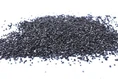
First off, let's understand what AG-activated carbon is. Our Water Purification AG-Activated Carbon is made from high - quality materials and has a super porous structure. This structure gives it a huge surface area, which is key to its ability to adsorb all sorts of substances. When water passes through this activated carbon, the pollutants get stuck to the carbon's surface.
Now, pharmaceuticals in water are a big deal. We're talking about drugs like antibiotics, painkillers, and hormones that end up in our water systems. They come from various sources, like people flushing unused medications down the toilet or the excretion of drugs from our bodies. These pharmaceuticals can have some serious impacts on the environment and human health. For example, the presence of antibiotics in water can lead to the development of antibiotic - resistant bacteria, which is a major global health threat.
So, can our AG - activated carbon take care of these pharmaceuticals? Well, the answer is a pretty solid yes, and here's why. The porous nature of our activated carbon acts like a magnet for different molecules. Pharmaceuticals, with their unique chemical structures, can be adsorbed onto the surface of the carbon. The adsorption process depends on a few factors, such as the size and shape of the pharmaceutical molecules, the pH of the water, and the temperature.
Let's talk about the size of the molecules. Our AG - activated carbon has pores of different sizes. Smaller pharmaceutical molecules can easily fit into the smaller pores, while larger ones may get adsorbed on the outer surface or in the larger pores. This means that a wide range of pharmaceutical compounds can be targeted by our activated carbon.
The pH of the water also plays a role. Some pharmaceuticals are more likely to be adsorbed at certain pH levels. For example, acidic pharmaceuticals may be better adsorbed in slightly basic water conditions. Our AG - activated carbon can work effectively over a relatively wide pH range, but adjusting the pH of the water can sometimes enhance the adsorption process.
Temperature is another factor. In general, higher temperatures can increase the rate of adsorption up to a certain point. But usually, the water treatment processes happen at normal environmental temperatures, and our AG - activated carbon can still perform well under these conditions.
We've done a bunch of tests in our labs to see how well our AG - activated carbon works against pharmaceuticals. In these tests, we've found that it can remove a significant amount of common pharmaceuticals from water. For instance, it can remove a large percentage of ibuprofen, which is a widely used painkiller. We've also seen good results with antibiotics like amoxicillin.
But it's not just about removing one or two types of pharmaceuticals. Our AG - activated carbon can handle a mixture of different drugs. In real - world water sources, you're not going to find just one pharmaceutical; there'll be a cocktail of different compounds. Our product is designed to deal with this complexity.
Now, compared to other types of activated carbon and water treatment methods, our AG - activated carbon has some advantages. For example, compared to Electroplate Special Activated Carbon, which is mainly used for electroplating wastewater treatment, our AG - activated carbon is specifically tailored for water purification and has been optimized to target pharmaceuticals and other common water pollutants.


And when we look at Petrochemical Special Activated Carbon, which is used for petrochemical wastewater treatment, our product has a different pore size distribution and surface chemistry that make it more suitable for removing pharmaceuticals.
In a water treatment plant, our AG - activated carbon can be used in different ways. It can be added to a filtration system, where the water flows through a bed of activated carbon. This allows for continuous treatment of large volumes of water. It can also be used in batch treatment processes, where a specific amount of water is treated with a certain amount of activated carbon for a set period of time.
One of the great things about our AG - activated carbon is its cost - effectiveness. It's relatively inexpensive compared to some other advanced water treatment technologies. And it has a long lifespan, which means you don't have to replace it very often. This makes it a great option for both large - scale water treatment facilities and smaller, more local water purification setups.
If you're in the business of water treatment, whether it's a municipal water plant, an industrial facility, or a small - scale water purification startup, our Water Purification AG - Activated Carbon could be the solution you've been looking for. We're here to provide you with high - quality products and excellent customer service. If you're interested in learning more about how our AG - activated carbon can help you remove pharmaceuticals from water, or if you want to discuss your specific water treatment needs, don't hesitate to reach out. We'd love to have a chat and work with you to find the best solution for your water purification challenges.
In conclusion, our AG - activated carbon is a powerful tool in the fight against pharmaceuticals in water. Its unique properties make it well - suited for adsorbing a wide range of pharmaceutical compounds, and it offers a cost - effective and efficient solution for water treatment. So, if you're dealing with pharmaceutical - contaminated water, give our product a try and see the difference it can make.
References
- "Adsorption of Pharmaceuticals on Activated Carbon: A Review" by X. Zhang et al.
- "Impact of Pharmaceuticals in Water on the Environment and Human Health" by Y. Wang.
- "Water Treatment Technologies for Pharmaceutical Removal" by Z. Liu.