


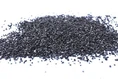


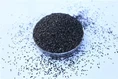
What is the plasticity of Nutshell Water Purification Activated Carbon?
As a supplier of Nutshell Water Purification Activated Carbon, I've witnessed firsthand the remarkable properties and wide - ranging applications of this unique product. In this blog, I aim to delve into the concept of plasticity in the context of Nutshell Water Purification Activated Carbon, exploring its significance, influencing factors, and practical implications.
Understanding Plasticity in Activated Carbon
Plasticity in Nutshell Water Purification Activated Carbon is not the same as the traditional concept of plasticity in materials like clay or polymers. For activated carbon, plasticity refers to its ability to adapt and perform effectively under different environmental conditions and purification requirements. It encompasses several key aspects, including its physical, chemical, and adsorption - related characteristics.
Physically, the plasticity of Nutshell Water Purification Activated Carbon is related to its pore structure. The nutshell - based activated carbon has a well - developed porous structure, which can vary in terms of pore size distribution. This allows it to adsorb a wide range of contaminants, from large organic molecules to small inorganic ions. The pore structure can be engineered during the manufacturing process to optimize its performance for specific purification tasks. For example, a carbon with a higher proportion of mesopores may be more suitable for adsorbing larger organic compounds, while a carbon with a greater number of micropores can be more effective for removing small molecules and gases.
Chemically, the surface chemistry of Nutshell Water Purification Activated Carbon plays a crucial role in its plasticity. The surface of the activated carbon can be modified to have different functional groups, such as hydroxyl, carboxyl, and phenolic groups. These functional groups can interact with contaminants through various mechanisms, including electrostatic attraction, hydrogen bonding, and chemical reactions. By adjusting the surface chemistry, the activated carbon can be made more selective towards certain types of contaminants. For instance, a carbon with a high concentration of basic functional groups may be more effective for adsorbing acidic contaminants, while a carbon with acidic functional groups can better adsorb basic contaminants.
Factors Influencing the Plasticity of Nutshell Water Purification Activated Carbon
Several factors can influence the plasticity of Nutshell Water Purification Activated Carbon. One of the primary factors is the raw material. Different types of nutshells, such as coconut shells, walnut shells, and apricot kernel shells, have different chemical compositions and physical structures. Coconut shell - based activated carbon, for example, is known for its high hardness and well - developed microporous structure, which makes it suitable for applications requiring high - purity water purification. On the other hand, walnut shell - based activated carbon may have a more mesoporous structure, making it better for adsorbing larger molecules.
The manufacturing process also has a significant impact on the plasticity of the activated carbon. The activation method, which can be either physical or chemical, determines the pore structure and surface chemistry of the carbon. Physical activation involves heating the nutshells in the presence of an oxidizing gas, such as steam or carbon dioxide, at high temperatures. This process creates a porous structure by burning off some of the carbonaceous material. Chemical activation, on the other hand, uses chemicals such as phosphoric acid or potassium hydroxide to react with the nutshells and create pores. The choice of activation method and the process parameters, such as temperature, time, and gas flow rate, can be adjusted to tailor the properties of the activated carbon.
Environmental conditions, such as temperature, pH, and the presence of other substances in the water, can also affect the plasticity of Nutshell Water Purification Activated Carbon. For example, an increase in temperature can enhance the diffusion rate of contaminants into the pores of the carbon, but it may also reduce the adsorption capacity due to the increased kinetic energy of the molecules. The pH of the water can influence the surface charge of the activated carbon and the ionization state of the contaminants, thereby affecting the adsorption mechanism. The presence of other substances, such as salts or organic matter, can compete with the target contaminants for adsorption sites on the carbon surface.
Practical Applications and the Role of Plasticity
The plasticity of Nutshell Water Purification Activated Carbon makes it suitable for a wide range of practical applications. In drinking water treatment, it can be used to remove various contaminants, including chlorine, pesticides, heavy metals, and organic compounds. The ability of the activated carbon to adapt to different water qualities and purification requirements is crucial in ensuring the safety and quality of drinking water. For example, in areas where the water source is contaminated with high levels of organic matter, a carbon with a high mesopore volume can be used to effectively adsorb these large molecules.
In industrial wastewater treatment, Nutshell Water Purification Activated Carbon can be used to treat a variety of wastewaters, such as those from the pharmaceutical, chemical, and food industries. The plasticity of the activated carbon allows it to handle different types of contaminants and varying concentrations. For instance, in the pharmaceutical industry, where the wastewater may contain a complex mixture of drugs and organic solvents, the activated carbon can be customized to adsorb these specific contaminants.
Another important application is in the purification of air and the recycling of tail liquids. Air Purification Activated Carbon can be used to remove odors, volatile organic compounds (VOCs), and other pollutants from the air. The plasticity of the activated carbon enables it to perform effectively under different air quality conditions. Tail Liquid Recycle Activated Carbon is used to recover valuable substances from industrial tail liquids and to reduce environmental pollution. The ability of the activated carbon to adapt to the specific composition of the tail liquids is essential for efficient recycling.


In the field of gold recovery, Nutshell Gold Recovery Carbon is widely used. The plasticity of the activated carbon allows it to selectively adsorb gold ions from the ore slurry or the leaching solution. The pore structure and surface chemistry of the carbon can be optimized to enhance the adsorption capacity and selectivity for gold.
Conclusion and Call to Action
In conclusion, the plasticity of Nutshell Water Purification Activated Carbon is a unique and valuable property that makes it a versatile and effective material for water purification, air purification, and other related applications. Its ability to adapt to different environmental conditions, purification requirements, and types of contaminants is what sets it apart from other purification materials.
If you are in need of high - quality Nutshell Water Purification Activated Carbon for your specific application, we are here to help. Our team of experts can work with you to understand your requirements and provide you with the most suitable activated carbon products. Whether you are in the drinking water treatment industry, industrial wastewater treatment, or other related fields, we have the expertise and resources to meet your needs. Contact us today to start a discussion about your purification requirements and explore the possibilities of using our Nutshell Water Purification Activated Carbon.
References
- Adsorption Technology and Design, by Ruthven, D. M.
- Activated Carbon Adsorption, by Yang, R. T.
- Water Treatment Unit Processes: Physical and Chemical, by Crittenden, J. C. et al.