


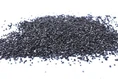


Hey there! I'm a supplier of Grease Bleaching Activated Carbon, and today I wanna chat about something super interesting – what's the influence of activated carbon on the density of grease?
First off, let's get a basic understanding of what activated carbon is. Activated carbon is a highly porous material with a huge surface area. This property makes it excellent at adsorbing all sorts of substances. It's made from carbon - rich materials like coconut shells, wood, or coal, and through a special activation process, it gets those tiny pores that can trap molecules.
Now, when it comes to grease, density is an important property. It affects how the grease behaves in different applications. For example, in the food industry, the density of cooking oil (a type of grease) can impact frying processes. In industrial lubricants, density can influence how well the grease lubricates moving parts.
So, how does activated carbon come into play? Well, when activated carbon is added to grease, it starts to do its magic of adsorption. Grease often contains impurities such as pigments, free fatty acids, and other unwanted substances. Activated carbon adsorbs these impurities onto its surface.
Let's talk about the science behind it. The adsorption process is based on intermolecular forces. The impurities in the grease have a certain affinity for the surface of the activated carbon. As the activated carbon particles are dispersed in the grease, the impurities get attracted to the pores of the carbon. This reduces the amount of these substances in the grease.
Now, how does this affect the density of the grease? When the impurities are removed, the composition of the grease changes. Most of the impurities have different densities compared to the pure grease components. For instance, free fatty acids might have a lower density than the triglycerides that make up a large part of the grease. When these free fatty acids are adsorbed by the activated carbon, the overall density of the grease can increase.
On the other hand, if the impurities have a higher density than the main grease components, their removal can lead to a decrease in the density of the grease. So, it really depends on the nature of the impurities present in the grease.
In practical applications, this change in density can have significant implications. In the food industry, a change in the density of cooking oil can affect the texture and taste of the fried food. If the density is too high, the food might absorb more oil, making it greasy. If the density is too low, the frying process might not be as efficient.
In the industrial lubricant sector, a change in density can affect the lubricating properties of the grease. A grease with the right density will flow smoothly between moving parts, reducing friction and wear. If the density is off, it might not provide the same level of protection.


As a Grease Bleaching Activated Carbon supplier, I've seen firsthand how different types of activated carbon can have different effects on the density of grease. For example, coconut - shell - based activated carbon is known for its high purity and large pore volume. It can be very effective in adsorbing a wide range of impurities in grease. You can check out Cigarette Filter Special Activated Carbon on our website, which is also made from high - quality coconut shells and has excellent adsorption properties.
Another type is the Utility Boiler Raw Water Purification Activated Carbon. Although it's mainly used for water purification, the same principles of adsorption apply. The activated carbon can remove impurities from water, and in a similar way, it can remove impurities from grease.
The Carbon Rod Filter Element Special Activated Carbon is also worth mentioning. It's designed for specific filtration applications, and its unique structure can provide efficient adsorption of impurities in grease.
If you're in the business of dealing with grease, whether it's for food, industrial, or other applications, the influence of activated carbon on the density of grease is something you should definitely consider. The right type of activated carbon can help you achieve the desired density and quality of your grease products.
If you're interested in learning more about our Grease Bleaching Activated Carbon or want to discuss how it can be used in your specific application, don't hesitate to reach out. We're here to help you find the best solution for your needs. Whether you're looking to improve the quality of your cooking oil or enhance the performance of your industrial lubricants, our activated carbon can make a difference.
References:
- "Activated Carbon: Adsorption Technology and Applications" by an industry expert in carbon technology.
- Research papers on the properties of grease and the effects of impurity removal on its density.