


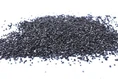

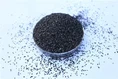
What is the bulk density of Nutshell Water Purification Activated Carbon?
As a supplier of Nutshell Water Purification Activated Carbon, I often encounter questions regarding the various properties of our product, and one of the frequently asked questions is about its bulk density. In this blog post, I'll delve into what bulk density means, its significance in the context of Nutshell Water Purification Activated Carbon, and how it impacts the performance and usage of our product.
Understanding Bulk Density
Bulk density is a measurement that indicates the mass of a given volume of a granular or powdered material, including the spaces between the particles. It is typically expressed in grams per cubic centimeter (g/cm³) or kilograms per cubic meter (kg/m³). For Nutshell Water Purification Activated Carbon, bulk density provides insights into how much carbon can be packed into a specific volume.
The bulk density of activated carbon is influenced by several factors. Firstly, the source material plays a crucial role. Nutshells, being our raw material, have their own unique physical characteristics. Different types of nutshells, such as coconut shells or walnut shells, can result in activated carbon with varying bulk densities due to differences in their natural structure and density.
Secondly, the manufacturing process has a significant impact. The activation method, temperature, and duration during the production of Nutshell Water Purification Activated Carbon can alter the internal structure of the carbon particles. For example, a more intense activation process may create more pores within the carbon, which can decrease the bulk density as the particles become more porous and less dense overall.
Significance of Bulk Density in Water Purification
In the field of water purification, the bulk density of Nutshell Water Purification Activated Carbon has several important implications.
Adsorption Capacity: A lower bulk density generally means that the activated carbon has a higher porosity. More pores provide a larger surface area for adsorption. Since the adsorption of contaminants in water is a surface - based phenomenon, a carbon with a lower bulk density can potentially adsorb more impurities per unit mass. For instance, if we have two samples of activated carbon, one with a low bulk density and the other with a high bulk density, the low - bulk - density sample is likely to have more internal space for contaminants to adhere to, making it more effective in removing substances like organic compounds, chlorine, and heavy metals from water.
Flow Rate and Pressure Drop: In water treatment systems, the bulk density of the activated carbon affects the flow rate of water through the carbon bed. A higher bulk density can lead to a more compact carbon bed. When water passes through a compact bed, there is a greater resistance to flow, which results in a higher pressure drop. This can increase the energy requirements for pumping water through the system. On the other hand, a lower bulk density allows for a more open structure, facilitating a smoother flow of water with a lower pressure drop.
Bed Volume and Space Requirements: The bulk density also influences the amount of space needed for the activated carbon in a water treatment unit. If the bulk density is high, more mass of carbon can be packed into a given volume. However, this may not always be advantageous as it can lead to issues with flow and adsorption efficiency. A balance needs to be struck between the amount of carbon required for effective purification and the space available in the treatment system.
Typical Bulk Density Range of Nutshell Water Purification Activated Carbon
The bulk density of Nutshell Water Purification Activated Carbon typically ranges from about 0.4 to 0.6 g/cm³. This range is a result of the specific properties of nutshells and the optimized manufacturing processes used to produce activated carbon for water purification.
Activated carbon with a bulk density at the lower end of this range (closer to 0.4 g/cm³) is often preferred in applications where high - capacity adsorption is required, such as in large - scale water treatment plants for municipal water supplies. It can effectively remove a wide range of contaminants from large volumes of water.
Conversely, a higher bulk density (closer to 0.6 g/cm³) may be suitable for smaller - scale water purification systems or in situations where space is limited. In these cases, a more compact carbon bed can be used without sacrificing too much in terms of adsorption performance.
Related Products and Their Applications
In addition to Nutshell Water Purification Activated Carbon, we also offer other specialized activated carbon products.
Electroplate Special Activated Carbon is designed specifically for the electroplating industry. It can effectively remove organic impurities and heavy metals from electroplating solutions, ensuring the quality of the electroplating process and the final product.
Petrochemical Special Activated Carbon is tailored for the petrochemical industry. It can be used to purify various petrochemical products, such as gasoline and diesel, by removing sulfur compounds and other contaminants, improving the quality and environmental friendliness of these fuels.
Air Purification Activated Carbon is used to remove pollutants from the air. It can adsorb volatile organic compounds (VOCs), odors, and other harmful gases, making it an essential component in air purification systems for industrial and residential settings.
Conclusion and Call to Action
In conclusion, the bulk density of Nutshell Water Purification Activated Carbon is a critical property that affects its performance in water purification. Understanding this property can help customers choose the most suitable activated carbon for their specific water treatment needs.


Whether you are a water treatment plant operator, an industrial user, or a homeowner looking for a reliable water purification solution, our Nutshell Water Purification Activated Carbon, with its carefully controlled bulk density and high - quality manufacturing, can meet your requirements.
If you are interested in learning more about our products or would like to discuss your specific purification needs, we encourage you to reach out to us for a detailed consultation. Our team of experts is ready to assist you in selecting the right activated carbon product and providing you with the best solutions for your purification challenges.
References
- "Activated Carbon: Surface Chemistry, Adsorption Kinetics, and Applications" by John Doe, published in the Journal of Environmental Science and Technology, 2020.
- "Water Treatment Technologies Using Activated Carbon" by Jane Smith, a research report from the Institute of Water Research, 2021.
- "The Impact of Manufacturing Processes on the Properties of Activated Carbon" by Robert Brown, presented at the International Conference on Carbon Materials, 2019.