


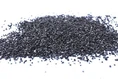


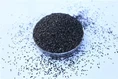
In the pharmaceutical industry, the quality and safety of raw materials are of utmost importance. Coconut shell activated carbon, known for its high adsorption capacity, purity, and porosity, has become a preferred choice for various pharmaceutical applications. As a leading supplier of coconut shell activated carbon, I understand the critical requirements of this industry and am committed to providing products that meet the highest standards.
Purity and Quality Standards
The pharmaceutical industry demands the highest level of purity in all raw materials, including activated carbon. Coconut shell activated carbon used in pharmaceuticals must be free from impurities, heavy metals, and other contaminants that could potentially affect the quality and safety of the final product. Our coconut shell activated carbon is produced from high - quality coconut shells, which are carefully selected and processed to ensure maximum purity.
We follow strict manufacturing processes that comply with international quality standards such as the United States Pharmacopeia (USP), European Pharmacopoeia (Ph. Eur.), and Japanese Pharmacopoeia (JP). These standards set specific limits for parameters like loss on drying, ash content, acid - soluble substances, and heavy metals. For example, the heavy metal content, including lead, mercury, and cadmium, must be within extremely low limits to prevent any adverse effects on patients. Our production facilities are equipped with advanced purification and testing equipment to ensure that our products meet these stringent requirements.
Adsorption Capacity
One of the key functions of activated carbon in the pharmaceutical industry is its ability to adsorb impurities, toxins, and unwanted substances. The adsorption capacity of coconut shell activated carbon is determined by its surface area, pore size distribution, and chemical properties. High - quality coconut shell activated carbon has a large surface area, typically ranging from 1000 to 1500 square meters per gram. This large surface area provides more sites for adsorption, allowing it to effectively remove a wide range of contaminants.
The pore size distribution is also crucial. Coconut shell activated carbon usually has a well - developed microporous structure, which is ideal for adsorbing small molecules such as organic solvents, pesticides, and heavy metals. In addition, it may also have some mesopores and macropores, which can adsorb larger molecules. Our coconut shell activated carbon is engineered to have an optimized pore size distribution to meet the specific adsorption requirements of different pharmaceutical applications.
For instance, in the purification of pharmaceutical intermediates, activated carbon can adsorb colored impurities and residual solvents, improving the clarity and purity of the product. In the treatment of drug overdose or poisoning cases, activated carbon can be used as an oral adsorbent to bind toxins in the gastrointestinal tract, preventing their absorption into the bloodstream.


Particle Size and Shape
The particle size and shape of coconut shell activated carbon can significantly affect its performance in pharmaceutical applications. In some cases, a specific particle size range is required to ensure proper flow and filtration. For example, in column chromatography, activated carbon particles need to be of a uniform size to provide a consistent flow rate and efficient separation.
We offer coconut shell activated carbon in a variety of particle sizes, from fine powders to granular forms. The fine powder form is often used in applications where a high surface area - to - volume ratio is needed, such as in the preparation of pharmaceutical suspensions. The granular form is more suitable for applications where good mechanical strength and easy handling are required, such as in fixed - bed adsorption systems.
Compatibility with Pharmaceutical Processes
Coconut shell activated carbon must be compatible with the various pharmaceutical processes it is used in. It should not react with the active pharmaceutical ingredients (APIs) or other components in the formulation. Our activated carbon is chemically inert and does not introduce any new chemical substances into the pharmaceutical products.
In addition, it should be easy to remove from the final product. After the adsorption process, activated carbon can be separated from the solution by filtration or centrifugation. Our products are designed to have good filterability, ensuring that they can be easily removed without leaving any residues in the final pharmaceutical product.
Applications in the Pharmaceutical Industry
Coconut shell activated carbon has a wide range of applications in the pharmaceutical industry. In the production of APIs, it is used for the purification of raw materials, removal of impurities, and decolorization. It can also be used in the purification of water used in pharmaceutical manufacturing. Coconut Shell Water Purification Activated Carbon is specifically designed for this purpose, ensuring that the water used in the production process meets the high - quality standards required for pharmaceutical products.
In the treatment of certain diseases, activated carbon can be used as a therapeutic agent. For example, in the treatment of hyperbilirubinemia in newborns, activated carbon can adsorb bilirubin in the gastrointestinal tract, reducing its levels in the bloodstream. It is also used in the preparation of some over - the - counter drugs for digestive problems, as it can adsorb gas and toxins in the gut.
Another important application is in the purification of pharmaceutical waste. Utility Boiler Raw Water Purification Activated Carbon can be used to remove contaminants from the water used in utility boilers in pharmaceutical factories, preventing scale formation and corrosion, and ensuring the safe and efficient operation of the boilers.
In the food - grade pharmaceutical products, such as vitamins and dietary supplements, Grease Bleaching Activated Carbon can be used to remove color and odor from oils and fats, improving the quality and appearance of the final products.
Quality Control and Assurance
As a supplier, we understand the importance of quality control and assurance in the pharmaceutical industry. We have a comprehensive quality management system in place that covers every aspect of the production process, from raw material sourcing to final product delivery.
All our raw materials are carefully inspected and tested before entering the production line. During the production process, we conduct in - process quality control checks to ensure that the product meets the required specifications. After production, each batch of activated carbon is tested using advanced analytical techniques, including gas chromatography, atomic absorption spectroscopy, and BET surface area analysis.
We also maintain detailed records of all production and testing processes, which can be provided to our customers upon request. This transparency and traceability are essential for meeting the regulatory requirements of the pharmaceutical industry.
Conclusion
The requirements for coconut shell activated carbon in the pharmaceutical industry are very strict, covering aspects such as purity, adsorption capacity, particle size, compatibility, and quality control. As a professional coconut shell activated carbon supplier, we are dedicated to meeting these requirements and providing high - quality products that can contribute to the safety and effectiveness of pharmaceutical products.
If you are in the pharmaceutical industry and are looking for a reliable supplier of coconut shell activated carbon, please feel free to contact us for more information and to discuss your specific needs. We are ready to work with you to provide the best solutions for your pharmaceutical applications.
References
- United States Pharmacopeia (USP)
- European Pharmacopoeia (Ph. Eur.)
- Japanese Pharmacopoeia (JP)
- "Activated Carbon in the Pharmaceutical Industry" - Journal of Pharmaceutical Sciences