


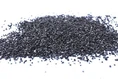


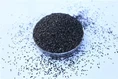
Liquor special activated carbon is a remarkable product widely used in the liquor - making industry. As a supplier of this essential material, I am deeply familiar with its physical and chemical properties, which play a crucial role in enhancing the quality of liquor.
Physical Properties
1. Porosity
One of the most prominent physical properties of liquor special activated carbon is its high porosity. The carbon has a vast network of pores with different sizes, including micropores (less than 2 nm in diameter), mesopores (2 - 50 nm), and macropores (greater than 50 nm). These pores provide an extremely large surface area for adsorption. For instance, a gram of high - quality liquor special activated carbon can have a surface area ranging from 800 to 1500 square meters. This large surface area allows the carbon to effectively adsorb various substances in the liquor. The micropores are particularly important for adsorbing small - molecular compounds such as some flavor - related substances and impurities. Mesopores can accommodate larger molecules, and macropores facilitate the rapid diffusion of molecules into the carbon structure, ensuring efficient adsorption processes.
2. Particle Size and Shape
Liquor special activated carbon comes in different particle sizes and shapes. The particle size can vary from fine powders to larger granules. Fine - powder activated carbon has a larger external surface area per unit mass, which enables faster adsorption kinetics. It can quickly interact with the liquor and remove impurities. However, it may be more difficult to separate from the liquor after treatment. On the other hand, granular activated carbon, with its relatively larger particle size, is easier to handle and separate from the liquor. It can be used in fixed - bed adsorption columns, where the liquor flows through the column filled with the carbon. The shape of the particles also matters. Spherical or near - spherical particles tend to have better flow properties in packed beds, reducing the pressure drop during the liquor treatment process.
3. Density
The density of liquor special activated carbon is an important physical property. It affects the packing density in adsorption columns and the handling of the carbon. Generally, the apparent density of activated carbon used in the liquor industry is in the range of 0.4 - 0.6 g/cm³. A lower density carbon may have a higher porosity and a larger surface area, but it may also require more careful handling to prevent excessive dust generation. Higher - density carbon may be more suitable for applications where mechanical strength is crucial, such as in continuous - flow adsorption systems.
4. Hardness and Abrasion Resistance
Liquor special activated carbon needs to have sufficient hardness and abrasion resistance. During the adsorption process, the carbon particles may experience mechanical stress, especially in systems where there is a high - flow rate of liquor or in agitated tanks. If the carbon is not hard enough, it may break into smaller particles, which can lead to problems such as clogging of filters and contamination of the liquor. Good abrasion resistance ensures that the carbon maintains its integrity and performance over multiple adsorption cycles.
Chemical Properties
1. Surface Chemistry
The surface of liquor special activated carbon has a complex chemical composition. It contains various functional groups such as hydroxyl (-OH), carboxyl (-COOH), carbonyl (C = O), and phenolic groups. These functional groups can interact with different substances in the liquor through various chemical forces, including hydrogen bonding, electrostatic interactions, and van der Waals forces. For example, the carboxyl groups on the carbon surface can form hydrogen bonds with polar molecules in the liquor, such as some flavor - enhancing compounds or impurities. The surface chemistry also affects the selectivity of the carbon towards different substances. By modifying the surface functional groups, the carbon can be tailored to adsorb specific types of compounds, such as removing off - flavors while retaining the desirable flavor components in the liquor.
2. Adsorption Selectivity
Liquor special activated carbon shows different adsorption selectivities for various substances in the liquor. It can selectively adsorb impurities such as fusel oils, aldehydes, and some sulfur - containing compounds, which are known to cause off - flavors and odors in the liquor. At the same time, it can minimize the adsorption of desirable flavor and aroma compounds, such as esters and alcohols that contribute to the characteristic taste and smell of the liquor. This selectivity is achieved through a combination of the carbon's pore structure and surface chemistry. For example, the size - exclusion effect of the pores can prevent large - sized flavor compounds from entering the pores, while the surface functional groups can interact specifically with the impurities.
3. Chemical Stability
The chemical stability of liquor special activated carbon is essential. It should be resistant to chemical reactions with the components in the liquor, such as acids, bases, and organic solvents. In the liquor - making process, the carbon may be exposed to different pH conditions and various chemical environments. A chemically stable carbon will not release any harmful substances into the liquor during the adsorption process. It can maintain its adsorption performance over a wide range of chemical conditions, ensuring the quality and safety of the treated liquor.
4. Reactivity with Oxygen
Although liquor special activated carbon is generally stable, it can react with oxygen under certain conditions, especially at high temperatures. Oxidation of the carbon can lead to a decrease in its adsorption capacity and a change in its physical and chemical properties. Therefore, proper storage and handling of the carbon are necessary to prevent oxidation. For example, the carbon should be stored in a dry and air - tight environment to minimize its exposure to oxygen.
Applications in the Liquor Industry
The unique physical and chemical properties of liquor special activated carbon make it an indispensable material in the liquor industry. It is used for the purification and refinement of various types of liquor, including白酒 (Chinese liquor), wine, and spirits. By removing impurities and off - flavors, it improves the clarity, taste, and aroma of the liquor. In addition, it can also be used in the production of high - quality liquor by selectively adsorbing and adjusting the flavor components.
Related Products
In addition to Liquor Special Activated Carbon, we also offer other types of activated carbon products, such as Coal Columnar Activated Carbon and Coal Broken Activated Carbon. These products have their own unique properties and applications, and can be selected according to different customer needs.


Conclusion
As a supplier of liquor special activated carbon, I understand the importance of these physical and chemical properties in ensuring the quality of the liquor. Our products are carefully manufactured to meet the high - standards of the liquor industry. If you are interested in our liquor special activated carbon or other related products, please feel free to contact us for more information and to discuss your specific requirements. We are committed to providing you with the best products and services to help you achieve excellent results in the liquor - making process.
References
- "Activated Carbon Adsorption" by Perry's Chemical Engineers' Handbook.
- "Carbon Materials in the Beverage Industry" - A research paper from a leading journal in the food and beverage technology field.
- "Principles of Adsorption and Adsorption Processes" by Douglas M. Ruthven.