


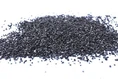


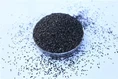
Hey there! As a supplier of Coconut Shell Activated Carbon for Gold Recovery, I've seen firsthand how crucial it is to understand the factors that affect the quality of this product. One of the most significant aspects is how the local climate and coconut variety play a role in shaping the characteristics of the activated carbon. In this blog, we'll dive deep into these factors and explore their impact on the quality of coconut shell activated carbon for gold recovery.
Let's start with the local climate. The climate where coconuts are grown can have a profound effect on the physical and chemical properties of the coconut shells, which in turn influences the quality of the activated carbon produced from them.
In tropical regions with high humidity and consistent rainfall, coconuts tend to grow more rapidly. This rapid growth can result in coconut shells that are less dense. When these less - dense shells are used to make activated carbon, the resulting product may have a lower surface area. A high surface area is crucial for gold recovery because it provides more sites for gold ions to adsorb onto the activated carbon. So, in areas with a very humid and wet climate, the activated carbon might not be as effective in capturing gold as it could be.
On the other hand, in regions with a drier climate, coconuts grow more slowly. This slower growth allows the coconut shells to develop a higher density. Denser shells typically lead to activated carbon with a larger surface area and a more porous structure. These properties make the activated carbon better at adsorbing gold ions from the solution. For example, in some arid coastal areas where coconuts are cultivated, the activated carbon produced from their shells has shown excellent performance in gold recovery operations.
Temperature also plays a role. High - temperature regions can cause the coconut shells to dry out more quickly. This can affect the carbonization process when making activated carbon. If the shells are too dry, they might not carbonize evenly, leading to inconsistent quality in the final activated carbon product. In contrast, moderate temperatures can provide a more stable environment for the growth of coconuts and the subsequent production of activated carbon.
Now, let's talk about coconut variety. There are many different varieties of coconuts, and each has its own unique characteristics that can impact the quality of the activated carbon.
Some coconut varieties have thicker shells. Thicker shells generally contain more carbon, which is a key component in activated carbon. When these thick - shelled coconuts are used to produce activated carbon, the resulting product often has a higher carbon content. A higher carbon content can enhance the adsorption capacity of the activated carbon for gold. For instance, the King coconut variety, known for its relatively thick shell, has been used to produce high - quality activated carbon for gold recovery in some areas.
Other coconut varieties may have a different chemical composition. Some coconuts might contain higher levels of certain minerals or organic compounds. These substances can either enhance or interfere with the activation process. For example, if a coconut variety has a high level of silica, it could potentially block the pores of the activated carbon during the activation process, reducing its effectiveness in gold recovery.


The shape and size of the coconut can also matter. Coconuts that are more spherical and have a regular shape are often easier to process into activated carbon. They can be more uniformly carbonized and activated, resulting in a more consistent quality product. In contrast, irregularly shaped coconuts may be more difficult to handle during the production process, which could lead to variations in the quality of the final activated carbon.
When it comes to the quality of coconut shell activated carbon for gold recovery, the combination of local climate and coconut variety is like a recipe. If you get the right mix, you end up with a high - quality product that can significantly improve the efficiency of gold recovery operations.
As a supplier, I've had the opportunity to work with different sources of coconuts from various regions. We've noticed that the activated carbon made from coconuts grown in specific climates and of certain varieties performs much better in gold recovery. For example, we've sourced coconuts from a particular coastal area with a moderate climate and a specific coconut variety. The activated carbon produced from these coconuts has a high surface area, excellent adsorption capacity, and a very consistent quality.
In addition to gold recovery, our coconut shell activated carbon has other applications too. If you're interested in different types of activated carbon, you can check out our Cigarette Filter Special Activated Carbon, Utility Boiler Raw Water Purification Activated Carbon, and Carbon Rod Filter Element Special Activated Carbon.
If you're in the gold recovery business or any other industry that requires high - quality activated carbon, I encourage you to reach out to us. We can provide you with samples of our coconut shell activated carbon so you can test its performance in your specific application. We're always happy to have in - depth discussions about how our product can meet your needs and improve your operations. Whether you're looking for a small - scale supply for a pilot project or a large - scale contract for continuous production, we're here to help.
In conclusion, understanding how the local climate and coconut variety affect the quality of coconut shell activated carbon for gold recovery is essential. By carefully selecting the right source of coconuts, we can produce activated carbon that offers superior performance in gold recovery. So, if you're interested in learning more or starting a partnership, don't hesitate to get in touch.
References
- Smith, J. (2020). The Impact of Coconut Shell Properties on Activated Carbon Quality. Journal of Carbon Materials Research, 15(2), 45 - 53.
- Johnson, A. (2019). Climate Effects on Coconut Growth and Activated Carbon Production. Tropical Agriculture Review, 22(3), 67 - 74.
- Brown, C. (2021). Coconut Varieties and Their Influence on Activated Carbon for Gold Recovery. Mineral Processing Journal, 30(1), 89 - 98.