


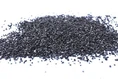

As a supplier of Coal Broken Activated Carbon, I've witnessed firsthand the remarkable capabilities of this product in adsorbing pollutants. In this blog, I'll delve into the science behind how coal broken activated carbon works to remove various contaminants from different environments.
Understanding Coal Broken Activated Carbon
Coal broken activated carbon is a porous material derived from high - quality coal through a series of processes including carbonization and activation. It has a large surface area, which is crucial for its adsorption properties. One gram of coal broken activated carbon can have a surface area ranging from 500 to 1500 square meters. This extensive surface area provides numerous sites for pollutants to adhere to.
The activation process creates a network of tiny pores within the carbon structure. These pores come in different sizes, including micropores (less than 2 nanometers in diameter), mesopores (2 - 50 nanometers), and macropores (greater than 50 nanometers). Each type of pore plays a specific role in the adsorption process.
Physical Adsorption Mechanisms
Van der Waals Forces
The most common mechanism of adsorption in coal broken activated carbon is physical adsorption, which is mainly driven by Van der Waals forces. These are weak intermolecular forces that exist between all molecules. When a pollutant molecule comes close to the surface of the activated carbon, the Van der Waals forces cause the molecule to be attracted and held onto the carbon surface.
For example, in the case of gas - phase adsorption, volatile organic compounds (VOCs) such as benzene, toluene, and xylene can be effectively adsorbed by coal broken activated carbon. The VOC molecules are attracted to the carbon surface due to the Van der Waals forces, and they form a thin layer on the surface of the pores.
Capillary Condensation
Another physical adsorption mechanism is capillary condensation. When the relative humidity is high or the partial pressure of a vapor is significant, the vapor can condense inside the small pores of the activated carbon. For instance, in an industrial setting where there is a high concentration of water vapor along with other pollutants, water can condense in the micropores of the coal broken activated carbon. This can enhance the adsorption of other soluble pollutants as they dissolve in the condensed water.
Chemical Adsorption Mechanisms
Surface Functional Groups
Coal broken activated carbon can also undergo chemical adsorption. The surface of the activated carbon contains various functional groups such as hydroxyl (-OH), carboxyl (-COOH), and carbonyl (-C = O) groups. These functional groups can react with certain pollutants through chemical reactions.
For example, heavy metal ions like lead (Pb²⁺), mercury (Hg²⁺), and cadmium (Cd²⁺) in water can react with the functional groups on the activated carbon surface. The metal ions can form chemical bonds with the oxygen - containing functional groups, resulting in the removal of the heavy metals from the water.
Oxidation - Reduction Reactions
In some cases, oxidation - reduction reactions can occur on the surface of the activated carbon. For example, when treating water containing chlorine or other oxidizing agents, the activated carbon can act as a reducing agent. The carbon surface can donate electrons to the oxidizing agents, converting them into less harmful substances.
Adsorption in Different Environments
Air Purification
In air purification applications, coal broken activated carbon is widely used to remove odors, VOCs, and other gaseous pollutants. In industrial facilities such as paint shops, printing plants, and chemical factories, large amounts of VOCs are released into the air. Coal broken activated carbon filters can be installed in ventilation systems to adsorb these pollutants.
The large surface area and the pore structure of the activated carbon allow it to capture a wide range of VOC molecules. The micropores are particularly effective at adsorbing small - sized VOC molecules, while the mesopores and macropores help in the diffusion of the gas molecules to the inner surface of the carbon.


Water Treatment
In water treatment, coal broken activated carbon is used to remove organic pollutants, heavy metals, and chlorine. In municipal water treatment plants, activated carbon filters are often used as a final polishing step to improve the taste and odor of the water.
For organic pollutants such as pesticides, herbicides, and pharmaceuticals, the activated carbon adsorbs them through physical and chemical adsorption mechanisms. The hydrophobic nature of the carbon surface makes it effective at adsorbing non - polar organic molecules.
Liquor Purification
Liquor Special Activated Carbon is a specialized form of coal - based activated carbon used in the liquor industry. It can remove impurities such as esters, aldehydes, and other flavor - altering substances from the liquor. The activated carbon adsorbs these substances, improving the clarity, taste, and quality of the liquor.
Factors Affecting Adsorption
Temperature
Temperature has a significant impact on the adsorption process. In general, physical adsorption is an exothermic process, which means that it releases heat. As the temperature increases, the adsorption capacity of the activated carbon decreases because the increased thermal energy makes it easier for the adsorbed molecules to break away from the carbon surface.
However, for some chemical adsorption processes, an increase in temperature can sometimes enhance the reaction rate, leading to an increase in adsorption capacity within a certain temperature range.
pH
The pH of the solution or the gas environment can also affect the adsorption process. In water treatment, the pH can influence the surface charge of the activated carbon and the speciation of the pollutants. For example, at low pH values, the surface of the activated carbon may be positively charged, which can enhance the adsorption of anionic pollutants. At high pH values, the surface may be negatively charged, favoring the adsorption of cationic pollutants.
Pollutant Concentration
The initial concentration of the pollutant also plays a role in the adsorption process. At low pollutant concentrations, the adsorption capacity of the activated carbon may be high because there are more available adsorption sites. As the pollutant concentration increases, the adsorption sites become gradually occupied, and the adsorption rate may decrease.
Regeneration and Reuse
One of the advantages of coal broken activated carbon is its potential for regeneration and reuse. After the activated carbon has reached its adsorption capacity, it can be regenerated through various methods such as heating, steam treatment, or chemical treatment.
Heating the activated carbon to a high temperature can desorb the adsorbed pollutants, restoring the adsorption capacity of the carbon. Steam treatment can also be used to remove the pollutants by vaporizing them. Chemical treatment can be used to break the chemical bonds between the pollutants and the activated carbon.
Conclusion
Coal broken activated carbon is a powerful adsorbent with a wide range of applications in air purification, water treatment, and liquor purification. Its ability to adsorb pollutants is based on both physical and chemical adsorption mechanisms, which are influenced by factors such as temperature, pH, and pollutant concentration.
If you are looking for a reliable and effective solution for pollutant removal, our Coal Broken Activated Carbon is an excellent choice. We also offer Coal Columnar Activated Carbon for different applications. If you have any questions or are interested in purchasing our products, please feel free to contact us for further discussion and negotiation.
References
- "Activated Carbon Adsorption" by Perry's Chemical Engineers' Handbook.
- "Water Treatment Unit Processes: Physical and Chemical" by George Tchobanoglous, Franklin L. Burton, and H. David Stensel.
- "Air Pollution Control: A Design Approach" by Norman C. Craig.