


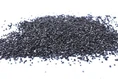

As a supplier of Petrochemical Special Activated Carbon, I am often asked whether our product can be effectively used in the treatment of petrochemical exhaust gases. In this blog, I will delve into this question, exploring the properties of petrochemical special activated carbon, its working principles in exhaust gas treatment, and real - world applications.
Properties of Petrochemical Special Activated Carbon
Petrochemical special activated carbon is a highly porous material with a large specific surface area. This characteristic is crucial as it provides numerous adsorption sites for various pollutants in petrochemical exhaust gases. The specific surface area can range from several hundred to over a thousand square meters per gram. For example, some high - quality petrochemical special activated carbons can have a specific surface area of up to 1500 m²/g.
In addition to its large surface area, the pore structure of petrochemical special activated carbon is also well - developed. It has a variety of pore sizes, including micropores, mesopores, and macropores. Micropores, with diameters less than 2 nm, are particularly effective in adsorbing small molecules such as volatile organic compounds (VOCs), which are common components in petrochemical exhaust gases. Mesopores (2 - 50 nm) and macropores (greater than 50 nm) help in the diffusion of larger molecules and the transportation of gases within the activated carbon structure.
The surface chemistry of petrochemical special activated carbon also plays an important role. It can be modified to have different surface functional groups, such as hydroxyl, carboxyl, and phenolic groups. These functional groups can enhance the adsorption selectivity and affinity towards specific pollutants. For instance, activated carbon with basic surface functional groups can have a better adsorption effect on acidic gases like sulfur dioxide.
Working Principles in Petrochemical Exhaust Gas Treatment
The treatment of petrochemical exhaust gases using petrochemical special activated carbon mainly relies on the principle of adsorption. Adsorption is a process in which molecules of pollutants in the exhaust gas adhere to the surface of the activated carbon. There are two main types of adsorption: physical adsorption and chemical adsorption.
Physical adsorption is mainly driven by van der Waals forces between the pollutant molecules and the activated carbon surface. It is a reversible process, and the adsorbed molecules can be desorbed under certain conditions, such as increasing the temperature or reducing the pressure. This type of adsorption is effective for a wide range of pollutants, including most VOCs.
Chemical adsorption, on the other hand, involves the formation of chemical bonds between the pollutant molecules and the surface functional groups of the activated carbon. It is usually an irreversible process and is more specific to certain pollutants. For example, the reaction between sulfur dioxide and the basic functional groups on the activated carbon surface is a form of chemical adsorption.
When petrochemical exhaust gases pass through a bed of petrochemical special activated carbon, the pollutants are first adsorbed onto the outer surface of the activated carbon particles. Then, they diffuse into the internal pores of the activated carbon, where they are further adsorbed. As the adsorption process continues, the activated carbon gradually reaches its saturation point, at which time it needs to be regenerated or replaced.
Real - World Applications
In the petrochemical industry, petrochemical special activated carbon has been widely used in the treatment of various exhaust gases. For example, in refineries, it is used to remove VOCs, hydrogen sulfide, and other odorous compounds from the exhaust gases generated during the refining process. The use of activated carbon can significantly reduce the emission of these pollutants, meeting environmental regulations and improving air quality.
In the production of petrochemical products such as plastics and synthetic rubber, petrochemical special activated carbon is also used to treat the exhaust gases containing monomers and other organic compounds. These compounds can be harmful to human health and the environment if released directly into the atmosphere. By using activated carbon adsorption, these pollutants can be effectively removed.


Moreover, petrochemical special activated carbon can be used in combination with other treatment technologies, such as catalytic oxidation and biological treatment. For example, in some cases, the exhaust gases are first pre - treated by catalytic oxidation to convert some of the pollutants into more easily adsorbable forms, and then further treated by activated carbon adsorption. This combined approach can improve the overall treatment efficiency and reduce the cost.
Comparison with Other Treatment Methods
Compared with other methods for petrochemical exhaust gas treatment, such as incineration and wet scrubbing, petrochemical special activated carbon has several advantages.
Incineration is a common method for treating high - concentration exhaust gases. However, it requires a large amount of energy and may produce secondary pollutants such as nitrogen oxides. In contrast, activated carbon adsorption is a relatively energy - efficient method, especially for treating low - to medium - concentration exhaust gases. It can selectively adsorb pollutants without generating significant secondary pollutants.
Wet scrubbing is another method used for exhaust gas treatment. It involves the use of a liquid scrubbing agent to remove pollutants from the exhaust gas. However, wet scrubbing may produce wastewater that needs to be further treated. Activated carbon adsorption does not generate wastewater, making it a more environmentally friendly option in some cases.
Regeneration and Reuse of Petrochemical Special Activated Carbon
One of the important aspects of using petrochemical special activated carbon in exhaust gas treatment is its regeneration and reuse. After the activated carbon reaches its saturation point, it can be regenerated to restore its adsorption capacity. There are several methods for regenerating activated carbon, including thermal regeneration, pressure - swing regeneration, and chemical regeneration.
Thermal regeneration is the most commonly used method. It involves heating the saturated activated carbon to a high temperature (usually 300 - 800 °C) in an inert atmosphere. The heat causes the adsorbed pollutants to desorb from the activated carbon surface, and the regenerated activated carbon can then be reused.
Pressure - swing regeneration is based on the principle that the adsorption capacity of activated carbon decreases with decreasing pressure. By reducing the pressure in the activated carbon bed, the adsorbed pollutants can be desorbed. This method is relatively energy - efficient but may require more complex equipment.
Chemical regeneration involves the use of chemical agents to react with the adsorbed pollutants and convert them into soluble compounds that can be washed away from the activated carbon. This method is more suitable for some specific pollutants.
Our Product Offerings
As a supplier of Petrochemical Special Activated Carbon, we offer a wide range of products to meet the different needs of our customers. Our products include Air Purification Activated Carbon, which is specifically designed for the purification of petrochemical exhaust gases. It has a high adsorption capacity for VOCs and other pollutants, and can effectively improve air quality.
We also provide Nutshell Water Purification Activated Carbon, which can be used in the pre - treatment of water in petrochemical plants to remove organic impurities. In addition, our Electroplate Special Activated Carbon is suitable for the treatment of exhaust gases generated in the electroplating process in the petrochemical industry.
Conclusion
In conclusion, petrochemical special activated carbon can be effectively used in the treatment of petrochemical exhaust gases. Its unique properties, such as large surface area, well - developed pore structure, and adjustable surface chemistry, make it an ideal adsorbent for a wide range of pollutants in petrochemical exhaust gases. It has been widely used in real - world applications and has shown good performance in reducing pollutant emissions and improving air quality.
If you are interested in our petrochemical special activated carbon products or have any questions about exhaust gas treatment, please feel free to contact us for procurement and further discussion. We are committed to providing high - quality products and professional technical support to help you solve your exhaust gas treatment problems.
References
- Yang, R. T. (1997). Gas Separation by Adsorption Processes. World Scientific.
- Fuertes, A. B., & Centeno, T. A. (2007). Activated carbons from lignocellulosic materials by chemical and physical activation: a comprehensive review. Chemical Engineering Journal, 131(1 - 3), 41 - 59.
- Rivera - Utrilla, J., Sánchez - Peña, J. A., Bautista - Torres, M. A., & Ferro - García, M. A. (2011). Adsorption of organic compounds from aqueous solutions on carbon materials. Chemical Engineering Journal, 173(1), 1 - 18.