




Hey there! As a honeycomb activated carbon supplier, I often get asked a ton of questions about the capabilities of our product. One question that pops up quite a bit is, "Can honeycomb activated carbon remove chromium?" Today, I'm going to dive deep into this topic and share everything I know.
First off, let's talk a bit about chromium. Chromium is a heavy metal that can be found in various industrial wastewaters, like those from electroplating, leather tanning, and metal finishing industries. It exists in different forms, but the most common ones are trivalent chromium (Cr(III)) and hexavalent chromium (Cr(VI)). Cr(VI) is particularly concerning because it's highly toxic, carcinogenic, and mutagenic. It can cause a range of health problems, including skin irritation, lung cancer, and kidney damage. So, finding effective ways to remove it from water and air is super important.
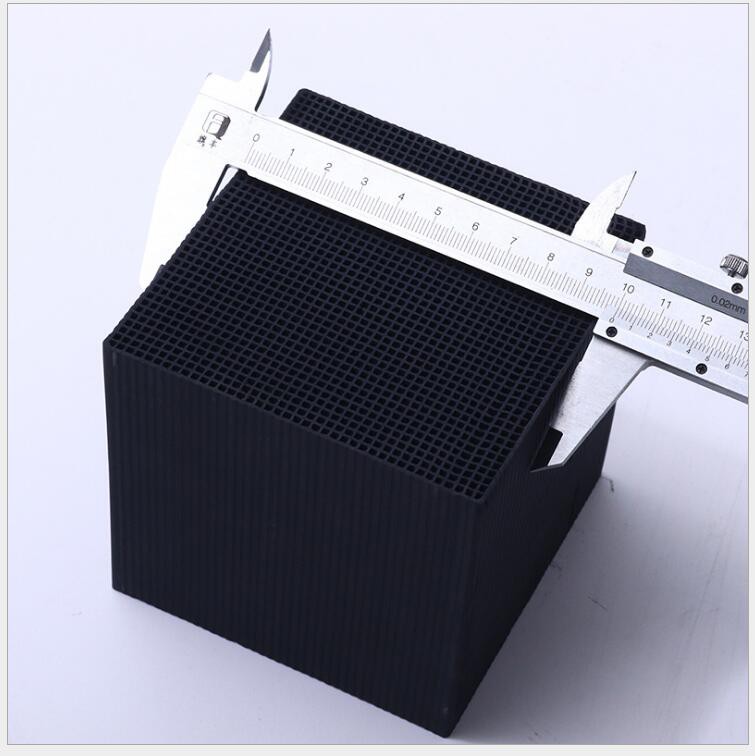
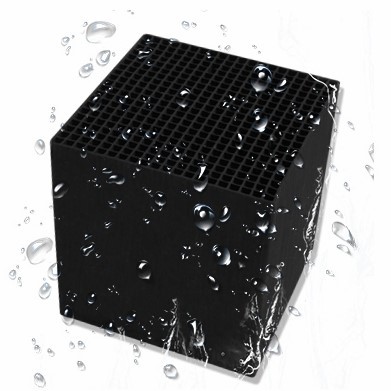
Now, onto honeycomb activated carbon. We offer two main types of honeycomb activated carbon: Common Honeycomb Activated Carbon and Waterproof Honeycomb Activated Carbon. The honeycomb structure of this activated carbon gives it a large surface area, high porosity, and low resistance to gas flow. These properties make it excellent for adsorption processes.
So, can honeycomb activated carbon remove chromium? The short answer is yes, but it's a bit more complicated than that. The effectiveness of honeycomb activated carbon in removing chromium depends on several factors.
Factors Affecting Chromium Removal
1. Chromium Species
As I mentioned earlier, chromium exists in different oxidation states. Cr(III) is relatively less toxic and less mobile compared to Cr(VI). Honeycomb activated carbon is generally more effective at adsorbing Cr(III) because it can form chemical bonds with the carbon surface through mechanisms like ion - exchange and surface complexation.
On the other hand, Cr(VI) is more challenging to remove. It usually exists as an anion in solution, and reducing it to Cr(III) is often a necessary first step. Some honeycomb activated carbons can catalyze the reduction of Cr(VI) to Cr(III) using the carbon's reducing functional groups. Once reduced to Cr(III), it can then be adsorbed more effectively.
2. pH of the Solution
The pH of the solution plays a crucial role in the adsorption of chromium by honeycomb activated carbon. For Cr(III), adsorption is more efficient at higher pH values (around pH 6 - 8) because at these pHs, Cr(III) forms hydroxide complexes that can be more easily adsorbed onto the carbon surface.
For Cr(VI), lower pH values (around pH 2 - 3) are often better for reduction and subsequent adsorption. At low pH, the carbon surface has a positive charge, which helps in attracting the negatively charged Cr(VI) ions.
3. Contact Time
The longer the contact time between honeycomb activated carbon and the chromium - containing solution or gas, the more opportunity there is for adsorption to occur. In industrial applications, contact time can be controlled by adjusting the flow rate of the fluid passing through the activated carbon bed. A slower flow rate generally allows for better adsorption.
4. Concentration of Chromium
The initial concentration of chromium in the solution or gas also affects the removal efficiency. At lower concentrations, honeycomb activated carbon can achieve a higher percentage removal. However, as the concentration increases, the carbon may become saturated more quickly, and the removal efficiency may decrease.
Mechanisms of Chromium Removal
Adsorption
Adsorption is the primary mechanism by which honeycomb activated carbon removes chromium. The large surface area of the carbon provides numerous adsorption sites. These sites can interact with chromium ions through physical adsorption (van der Waals forces) and chemical adsorption (formation of chemical bonds).
Reduction
As I mentioned before, some honeycomb activated carbons can reduce Cr(VI) to Cr(III). The carbon contains functional groups such as phenols, quinones, and carboxylic acids that can act as reducing agents. Once Cr(VI) is reduced to Cr(III), it can be more readily adsorbed onto the carbon surface.
Real - World Applications
In industrial settings, honeycomb activated carbon is often used in water treatment plants to remove chromium from wastewater. The activated carbon is packed into columns, and the wastewater is passed through these columns. By carefully controlling the operating conditions such as pH, flow rate, and temperature, high removal efficiencies can be achieved.
In air pollution control, honeycomb activated carbon can also be used to remove chromium compounds from industrial exhaust gases. The honeycomb structure allows for efficient gas - solid contact, enabling the removal of chromium - containing particulate matter and volatile chromium compounds.
Our Products and Chromium Removal
Our Common Honeycomb Activated Carbon is widely used in general air and water treatment applications. It has a good balance of surface area, porosity, and adsorption capacity, making it suitable for removing moderate levels of chromium.
If you're dealing with more challenging environments, such as high - humidity areas or wastewater with a high water content, our Waterproof Honeycomb Activated Carbon is the way to go. It's specially treated to resist water damage and still maintain its adsorption performance, ensuring effective chromium removal even in wet conditions.
Conclusion
So, to sum it up, honeycomb activated carbon can definitely remove chromium, but the efficiency depends on several factors. By understanding these factors and choosing the right type of honeycomb activated carbon for your specific application, you can achieve significant chromium removal.
If you're dealing with chromium - contaminated water or air and are interested in our honeycomb activated carbon products, don't hesitate to reach out. We're here to help you find the best solution for your chromium removal needs. Whether you need more information, want to discuss your specific requirements, or are ready to place an order, just get in touch. We look forward to hearing from you and helping you solve your chromium removal challenges.
References
- Foo, K. Y., & Hameed, B. H. (2010). Insights into the modeling of adsorption isotherm systems. Chemical Engineering Journal, 156(1), 2 - 10.
- Gupta, V. K., Jain, R., & Rastogi, A. (2001). Removal of hexavalent chromium from aqueous solutions by activated carbon developed from peanut shell: Adsorption studies. Journal of Colloid and Interface Science, 239(2), 251 - 262.